












English


Guide
Fallout 76 Hidden Vendor Bots Guide




Most merchants in Fallout 76 operate from relatively fixed locations—train stations, the Whitespring basement, and faction strongholds. These vendors are easy to locate and convenient for routine trading, but their inventory rotations tend to stay within predictable bounds. If you are looking to collect rare apparel, specialized plans, or items that simply never appear on standard shop shelves, you need to turn your attention to the hidden vendors and roaming traders scattered across Appalachia. What defines a hidden vendor is not trading efficiency—it is the element of uncertainty built into their spawn conditions, travel routes, and inventory tables. The Vendor Bot Responder from the random encounter pool, Grahm as he walks the length of the map, and several lesser-known traveling merchants all fall into this category. This guide organizes them by type—random-encounter vendors, wandering merchants, roaming traders, and stationary vendors tucked into out-of-the-way locations—so you can approach each one with a clear idea of where to look and how they work.
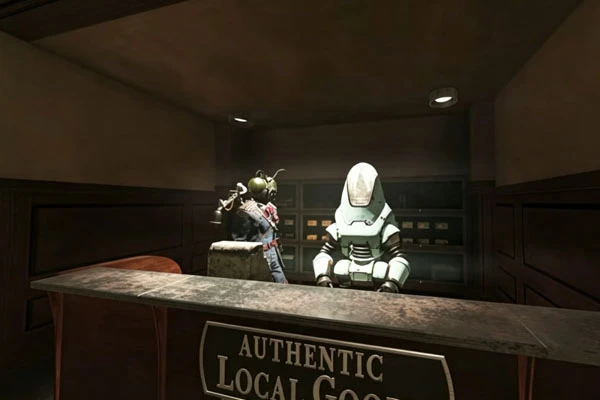
Vendor Bot Responder Locations
The Vendor Bot Responder is one of Fallout 76's most representative hidden merchants. Note the distinction: this is the random encounter variant, not to be confused with the stationary Vendor Bot Responders stationed at various train stations. The random-encounter version appears as a standard Protectron accompanied by two Eyebot guards and a pack brahmin. Unlike fixed vendors, it does not stay in one place—it enters the world exclusively through travel-type random encounters in the Forest region.
Main characteristics:
Randomized spawn location: The map provides no marker for this vendor. You must enter a random encounter zone and trigger the event yourself.
Limited operational range: Confined to random encounter points within the Forest region.
Rare inventory: Certain specialized apparel and plans exist in its loot table, making this bot an important channel for collectors pursuing hard-to-find items.
Per-character instanced inventory: Each character who initiates a trade sees their own inventory roll. Players with multiple characters can use this to multiply their chances from a single spawn.
Among the items that draw sustained player interest are the Hunter's Long Coat and the Clean Spacesuit. Community-maintained data over the years confirms that these apparel pieces appear in the bot's inventory at a measurable but limited probability, and the number of purchasable clothing items per encounter is typically small. If your goal is collecting rare outfits, tracking down the Vendor Bot Responder offers a meaningful return on the time invested.
Charleston Station—Primary Spawn Point
Charleston Station is the most frequently used location for hunting the Vendor Bot Responder. After fast-traveling to the station, head southeast along the railroad tracks and cross the long red railway bridge. Once across, turn around and run back along the same route, paying close attention to the treeline near the red barn and the encounter zone along the tracks. Player CAMPs can interfere with this process—if another player has placed their CAMP near the encounter zone, the spawn may be blocked. If repeated attempts yield nothing, check the area for nearby player structures and switch servers if necessary.
Backup Spawn Point
Lady Janet's Soft Serve serves as a reliable alternative. Upon arrival, orient yourself toward the overturned jeep on the road and the grassy area across from it. Compared to Charleston Station, this location involves a simpler approach route and tends to suffer less from CAMP interference. You may encounter feral ghouls or other hostiles along the way. Higher-level characters can clear them and continue; if your only objective is triggering the vendor, you can also choose to bypass combat where the terrain allows. When neither location produces the target vendor, server-hopping is the next step. Random encounters are probabilistic by design—several dry runs in a row do not indicate anything broken. Additionally, if you have multiple characters, the instanced inventory rule can be leveraged: once one character finds the vendor, other characters can enter the same world and check the inventory independently, increasing the total number of chances at rare items.
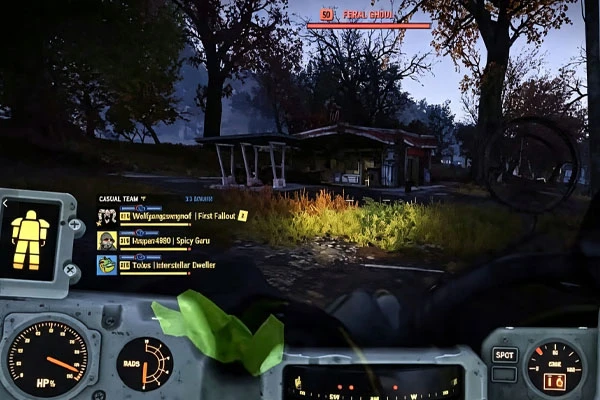
The Wandering Merchant With Rare Plans
Grahm is one of Fallout 76's most recognizable special merchants. A friendly level-50 Super Mutant, he travels the roads and wilds of Appalachia alongside his brahmin Chally. Unlike the random-encounter Vendor Bot, Grahm does not require repeated checking of a fixed spawn point. He moves along roadways and through regions in a pattern that, while not rigidly predictable, is not entirely random either. Whether you run into him on any given day depends heavily on server conditions and where your character happens to be. That said, seasoned players have identified several areas where sightings are more frequent:
Near Monongah Power Plant: The road in front of the plant is one of the more commonly reported activity zones.
Around Pleasant Valley Station: Following the road through this area occasionally puts you in Grahm's path.
Whitespring Station vicinity: The roads around Whitespring offer another possible encounter.
Near The Wayward: Accessible even to newer characters, making early-game encounters a real possibility.
Near the radio telescope: Sporadic sightings have been documented in the surrounding roads.
Grahm's inventory is the main reason to seek him out. His wares are closely tied to CAMP construction and specialized plans—the Mirror Ball, certain weapons, and related blueprints all command considerable attention. If you are building up a CAMP, collecting architectural plans, or refining your shelter's decorative details, Grahm belongs on your priority list. During Meat Week, he sets up a fixed stall at the event site; outside of that seasonal window, finding him is a matter of field exploration and happenstance.
Four Types of Roaming Traders
Beyond the Vendor Bot Responder and Grahm, the random encounter system can produce several other traveling merchants. Their rarity and inventory value vary, but if you encounter one during exploration, opening the trade menu is always worth a moment:
Chem dealer: Primarily offers chem-related plans and medical supplies. Practical for characters still building out their pharmaceutical resources.
Bow merchant: Specializes in bow modification plans. Some items may be gated behind faction reputation thresholds—encountering the merchant does not guarantee every plan is purchasable with caps alone.
General goods trader: Appears less frequently than the others. Inventory is a mixed bag, but rare apparel or specialized plans can surface. If you run into one, take the time to scroll through everything.
Ammunition vendor: Carries bulk ammunition and typically holds several fusion cores. Particularly useful for characters with high ammo consumption.
One additional merchant worth noting is the lemonade stand bot. The Lemonade recipe it sells attracts steady attention in the player trading market. Purchasing directly from the source is almost always more economical than going through another player's vending machine—if you see the recipe, buy it.
Stationary Vendors in Out-of-the-Way Locations
Some vendors are not hidden in the strict sense, but their placement is awkward enough that new players routinely get lost trying to find them. These NPCs deserve a spot in any vendor reference.
Harpers Ferry—Free States Vendor
After arriving at Harpers Ferry, follow the railroad tracks and locate the building entrance from there. The route involves obstacles and hostile creatures, so a first visit may take some time while you orient yourself. If you prefer to minimize combat, use the gaps between buildings to find a quieter approach. Near the fast-travel point stands a heavily damaged structure—you can enter through a large breach in the wall and edge along the building perimeter to reduce direct contact with enemies. A level-3 safe and a chemistry workbench are located near the vendor. After trading, gather whatever resources your character needs before moving on.
Wallace—Free States Vendor
Fast-travel to the Wallace map marker, then follow the red arrows painted along the railroad to navigate into the area. A level-3 locked door may block your way, but it is not the only passage—look around the surrounding structures for an alternate route rather than spending a perk card on the lock. Once inside, locate the wrecked train car and scan the distance for a half-collapsed building. Between that structure and a Free States recruitment poster, a small uphill trail runs to the right. Follow it to reach the vendor.
Watoga Shopping Plaza—Brotherhood of Steel Vendor
The Watoga Shopping Plaza vendor is comparatively easy to find. After fast-traveling, face the building directly ahead and enter through the left-side entrance to reach the shop. One caveat: this vendor does not always stay behind the counter. If hostile robots initiate combat nearby, the vendor may temporarily leave its post to join the fight. If you arrive and find the shop empty, check the building exterior and surrounding roads. If a firefight is in progress, wait for it to conclude—the vendor will typically return to its trading station afterward.
Practical Tips for Hunting Hidden Vendors
Locating hidden vendors involves a degree of chance, so beyond memorizing locations, understanding how server mechanics and daily trading rules operate can meaningfully improve your efficiency.
Shared cap pool: NPC vendors draw from a daily cap reserve—typically 1,400 caps, resetting on a UTC-based timer. There is no need to dump all your loot on a single vendor.
Chain your stops along a route: Flatwoods Church → Sutton Station → Whitespring Station → Enclave Bunker → Watoga Shopping Plaza → Watoga Station → Harpers Ferry. A well-planned route turns selling junk, restocking supplies, and checking for special vendors into a single coherent loop.
Server-hopping: If Charleston Station or Lady Janet's yields no Vendor Bot Responder, leave the current world and join a different server, then check the encounter points again. For any vendor that depends on random spawn conditions, server-hopping is one of the most commonly used techniques.
Private worlds: Fallout 1st subscribers can run their encounter checks in a private world. Since no other players will have passed through and triggered the encounter ahead of you, the environment tends to be more consistent for hunting specific random events.
Trading order: Pay attention to a vendor's remaining cap balance when buying and selling. If the vendor runs out of caps, you cannot continue offloading items regardless of how much you are carrying. The smarter sequence is to buy what you need first, then sell junk and excess resources against whatever cap balance remains.
Record your encounters: If you run into Grahm or another roaming merchant in the wild, note the region, road, and direction of travel. While this information cannot guarantee a repeat encounter, it builds familiarity with common activity zones and sharpens your instincts for where to watch during future exploration.
Fallout 76's hidden vendors are not the most efficient choice when your only objective is turning loot into caps as quickly as possible. For that, the fixed train station vendors remain more convenient. The value of hidden vendors lies elsewhere—in their specialized inventory and the texture they add to exploration. The random-encounter Vendor Bot Responder opens a channel to rare apparel and plans that few other sources provide. Grahm fills an essential role for CAMP builders and plan collectors. The lesser roaming traders and tucked-away stationary vendors further enrich Appalachia's trading landscape. For players with collection goals, familiarizing yourself with these merchants' spawn zones and trading characteristics gives everyday exploration a sharper sense of direction. The next time your route takes you past Charleston Station, through Whitespring, or along any of Appalachia's back roads, keep an eye on the treeline and the shoulder of the road—an ordinary stretch of map can, without warning, produce an item no regular vendor will ever carry.


