











English


Guide
POE2 Skill Gem System Explained




Calling the skill gem rework in POE2 a complete overhaul isn't an exaggeration. The experience from the first game, where a single piece of great gear would become completely useless because the socket colors didn't match your gems, is something veteran players still get high blood pressure just thinking about. The direction of the sequel's changes is clear: free skills from the tyranny of equipment sockets, so when you swap a piece of gear, you don't have to reconfigure your entire skill setup along with it. Looked at in isolation, it just saves you a bit of busywork. But when you zoom out to the full arc of leveling and endgame gearing, it fundamentally changes how you evaluate every piece of loot that drops. In the first game, finding a good chest piece meant thinking, "I need to recolor the sockets before this works with my current skills." In the sequel, it's "Put it on and try it. It just works." That's just the opening move. The way the rest of the system interlocks is different too.
Skill gems no longer socket into your gear — what does that actually change?
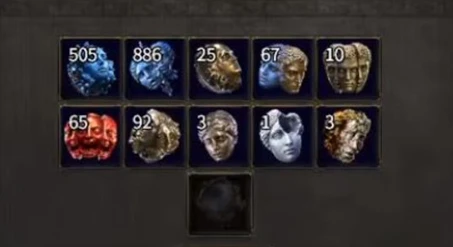
The sequel moves gem sockets off your equipment and into a dedicated skill interface, giving every skill its own independent slot. That sounds like just a UI change, but the ripple effects run deeper than you'd expect.
- When you weapon-swap, your skill configuration follows automatically. You set up which skills go with your main-hand weapon and which go with your off-hand weapon in the skill menu. When you press the swap key mid-combat, the gems switch over on their own. This is a massive quality-of-life upgrade for dual-weapon builds. The old nightmare of swapping weapons only to have your skills break because the socket colors on the new weapon didn't match is gone for good.
- Gear evaluation just lost an entire dimension of complexity. In the original game, a piece of equipment's worth was partly scored on socket count, socket color, and link configuration. In the sequel, equipment is judged purely on its own stats: defense, resistances, life, damage modifiers, with zero binding to your skills. So when you find a chest piece during the campaign that's just better than what you're wearing, you equip it. You don't first have to verify that it can physically hold your main skill. That friction is just gone.
- Once gems are freed from gear, the way you unlock support sockets changes too. In the first game, the six-link was the ultimate chase item. Six fully linked sockets meant one active skill supported by five support gems, achieved by burning through thousands of Orbs of Fusing on a piece of gear. The sequel moves that chase to the skill gem itself. Every skill gem starts with only two or three support sockets. You use Jeweller's Orbs directly on the gem to expand it, step by step, from two to three, three to four, and eventually to the maximum of five support sockets. A fully expanded skill gem is the equivalent of a first-game six-link. But here's the critical difference: in the original, the six-link you finally hit was permanently tied to that one piece of gear. Swap the gear, lose the links. In the sequel, once you've maxed out a skill gem's sockets, that gem stays maxed no matter how many times you change your equipment. Your investment doesn't get wiped by a gear upgrade.
- Jeweller's Orbs are consumable currency, and they're not exactly common drops. That means you won't be maxing out every skill gem in your arsenal early on. You need to prioritize: pick the one or two core skills your build revolves around and pour your Jeweller's Orbs into those first. Utility skills and aura gems can get by with two or three sockets for a long time. The satisfaction of the six-link chase is still there, just as intense as the first game. The difference is you're slamming orbs onto a gem instead of a chest piece, and the result doesn't get invalidated the next time you find an upgrade.
When you first get your hands on the system, you might think, "That's it? They just moved the UI around?" But by the time you reach the Atlas stage, you'll realize the compound benefit of frictionless gear swaps on your mapping rhythm is real. For a decade, the single most complained-about thing in POE was getting stuck on socket colors. The sequel finally sanded that friction point flat.
Uncut gems and the leveling mechanic — how this is different from the first game
In the sequel, once your character reaches certain level thresholds, you earn Uncut Skill Gems and Uncut Support Gems. These are items you take and choose which specific skill to carve out of them, rather than receiving finished ready-to-use gems from vendors or quest rewards like in the first game. The real intent behind this design is to put more agency in your hands, but when you're first starting out, the sheer number of options can make you hesitate and second-guess every choice.
- Uncut Skill Gems come in different tiers. Higher-tier uncut gems unlock a larger pool of skills to choose from, and the skill starts at a higher base level when created. Don't hoard low-tier uncut gems thinking you need to save them. During the early leveling phase, use them freely. They're there to help you get through the campaign. Later on, high-tier uncut gems become a stable and consistent drop, so burning a few low-level ones early won't gate your progression.
- The support gem roster is significantly wider than the first game, and the effect differences between supports are much more clearly delineated. Some increase area of effect, some add extra projectiles, some grant elemental penetration. The mindset for picking supports is no longer "stack as much damage multiplier as humanly possible." You first look at what dimension your main skill is lacking. A clear-speed skill needs coverage and reach. A bossing skill needs concentrated single-target punch. The support combination direction is completely different depending on what problem you're solving.
- Skills themselves also scale with your character's accumulated experience. In the sequel, individual skill gems no longer have their own separate XP bar to grind. Instead, progression is tied to your character level and specific conditions. More concretely, using a high-tier uncut gem lets you directly upgrade an existing skill to a higher level. That means the uncut gems you find in the endgame have dual purpose: you can either unlock entirely new skills or use them to power up old skills that have fallen behind in level. This design is so much more flexible than the original game's system of manually grinding every gem's XP bar to twenty.
One thing worth being blunt about: don't stress over finding the optimal setup early on. The trial-and-error cost of the gem system in the sequel has been driven down to near zero. Swapping out an entire set of support gems takes a few seconds. It costs no gear changes, consumes no currency, and loses no resources. That degree of freedom is essentially the game telling you to experiment, rather than looking up a guide before touching anything. Following a guide is fine, of course, but trying different support combinations yourself will build a much deeper understanding of what your skills actually do.
The hidden logic of support gems: max sockets doesn't mean best setup
Anyone who spent years playing the first game has a baked-in reflex: "I need to cram five supports into my main skill." The sequel does let you do that, once you've expanded a gem's support sockets to the cap of five using Jeweller's Orbs. But early on, your Jeweller's Orb supply is tight, and you can't max out every skill.
- Some support gems have hidden conflicts with each other. A support that simultaneously increases projectile count and reduces per-projectile damage, paired with a clearing skill whose base single-hit multiplier is already low, can result in a beautiful shotgun spread that kills absolutely nothing. Choosing supports requires thinking in terms of damage multiplier categories and diminishing returns, not simple additive stacking. After slotting one or two damage-increasing supports, stacking more of the same type sees its marginal benefit fall off a cliff. You're far better off pivoting to a utility support at that point than shoving in a third generic damage multiplier. Put another way: even if you've spent the Jeweller's Orbs to unlock all five sockets, filling every one with pure damage supports performs worse than a balanced mix with the right utility support.
- Utility supports are worth dramatically more in the sequel than they ever were in the first game. In the original's environment of damage inflation, functional supports only saw use in a handful of niche builds. The sequel's combat pace is slower, and monster threat comes more from positioning and attack patterns than raw HP pools. So a support that expands skill radius, raises ailment application rate, or improves cast animation speed often delivers more practical return than one more layer of damage. That statement isn't theorycrafted on a spreadsheet. It's something you figure out after getting surrounded and killed a few times in maps.
- Support gems themselves can also be leveled up. Using a high-tier Uncut Support Gem lets you boost a support's numerical effect, going from, say, "15% increased damage" to "25% increased damage." If you've identified a support that will stick with your build all the way to the endgame, prioritizing resources to max out its level should be no lower in priority than leveling the main skill itself.
The real underlying question behind "how do I choose supports" is "what kind of content is your build actually running?" A mapping setup and a bossing setup can be entirely different configurations. And the sequel gives you the convenience to toggle between them: the same active skill can save multiple preset support gem layouts. Swap to one preset for clearing, another for bossing. Compared to the original game where you'd be manually yanking gems out mid-session, it's not even in the same universe of convenience.
The POE2 skill gem system got one thing fundamentally right: it took the time players used to spend wrestling with the system and converted it into time spent making decisions with the system. You used to burn mental energy solving problems like mismatched socket colors, insufficient links, or the domino effect of swapping gear and needing to redo your entire gem layout. With those friction points simplified, the energy you have left can go entirely into thinking about the skills themselves: what to pick, how to combine them, what performs better in which scenarios. For veteran players, this is a genuine reduction in cognitive load. For new players, it lowers the barrier to entry. But the people who ultimately benefit the most are the same in both camps: the ones willing to invest time testing different support combinations, trying different skills in different contexts, and paying attention to how the system responds. The skill gem rework might not be POE2's single best change, but it might be the one that most consistently makes you feel, session after session, that this game actually got smarter.


