











English


Gameplay
How to Defeat Endgame Bosses in POE2?




Once you've put enough hours into POE2, you run into a pretty brutal truth — all those story bosses that made you think "this is hard" are basically preschool compared to what's waiting in the endgame. The first time I faced the Arbiter of Ash, I didn't even make it through the first phase mechanics before I was dead. Respawned, went back in, dead again. Six times in a row. After the sixth death I just sat there staring at the screen for a while, genuinely wondering if my entire build was fundamentally wrong from the ground up. It took a lot more attempts before it clicked: endgame bosses aren't something you can out-gear. You have to understand their attack patterns first. Only then can you even start talking about damage windows.
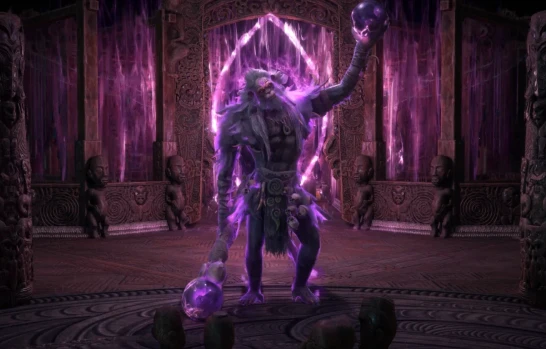
Boss skill rotations aren't something you memorize — you learn to read the tells instead
A lot of guides lay out endgame boss skills in fixed sequences, nice and neat, like you can just memorize the order and walk away with a flawless kill. The moment you're actually in the fight, you realize it doesn't work that way at all — the boss's skill order changes depending on where you're standing, how far away you are, and even what minions you've brought in. Rote memorization won't get you very far. But there are a few universal observation habits that'll help you figure out any boss fast.
- Every endgame boss's core heavy-hitter comes with an extremely obvious wind-up animation, and the telegraph window is way longer than anything in POE1 — this is one of the biggest changes in POE2's combat design. Big AoE attacks paint the ground red before they land. Cone and breath attacks are preceded by a very deliberate charge-up motion from the boss's head or weapon. The trick is that you have to actually leave attention bandwidth for watching the boss instead of tunnel-visioning on your own skill cooldowns. Turning your graphics settings down a notch is sometimes a blessing — at least you can see what the boss is doing.
- Most endgame boss skills fall into one of two categories: dodge-rollable and must-reposition. If the red warning zone has jagged borders, it means your dodge roll's i-frames won't save you — you have to physically move out of the damage area beforehand. This is the number one reason new players tilt into oblivion. It's not that they didn't roll. It's that they rolled and it did nothing, because the game's rules never let that roll work in the first place.
- When a boss summons adds or throws up environmental hazards, that's usually not the fight getting harder — it's the fight handing you a breather. Use that window to clear the adds, refill your flask charges, and reposition. Don't just stand there mindlessly DPS-ing. A lot of endgame boss designs follow this logic: the summon phase is your resupply window, not your "get even busier" phase. Misread that and you've just thrown away the recovery opportunity the game gave you.
Before your defenses are fully online, learning movement is worth ten times more than stacking damage
POE2 endgame boss damage follows a very clear design philosophy — most of their skills are not meant to be tanked. They're designed around the assumption that you were never supposed to get hit in the first place. Get hit, you die. Dodge it, you take zero. So before your defensive layers are truly mature, putting your energy into movement and reaction is way more cost-effective than obsessing over your damage numbers.
- 75% elemental resistances are the entry ticket to endgame bosses, not the finish line. A lot of bosses have built-in penetration or resistance-shredding mechanics. That 75% on your character sheet might actually be in the low forties once you're inside the fight. Overcapped resistances matter — push them as far above 100% as you can to leave headroom for penetration, especially fire and lightning. Those two elements cover the vast majority of endgame bosses. If you're charging in without even hitting 75%, let's be honest — you're just feeding.
- The ratio between your energy shield and life pool matters more than either number in isolation. Ten thousand life with three thousand shield versus five thousand life with eight thousand shield are two completely different survival profiles against an endgame boss. Shield gives you a buffer window after eating an AoE. Life determines whether that remaining window is long enough to drink your flasks back to safety. Don't blindly stack one type. The most common endgame death scenario is the boss catching you on whichever side of the split you neglected.
- Stop treating chaos resistance like a secondary stat you can half-ass. Several late-game bosses in POE2 deal a non-trivial amount of chaos damage, especially in Breach-related fights. Get your chaos res to at least 40% before you can say you're not getting one-shot. I've seen so many people burn through every last portal only to check their stats and realize their chaos res was negative or zero the whole time. All those portals? Basically wasted.

Your damage windows are way smaller than you think, so every second has to count
Endgame bosses are not target dummies. Especially in a party where the health pool scales up and the fight drags on, the boss cycles through skill patterns back to back without pause. The safe windows where you can actually stand there and output damage are dramatically shorter than anything you experienced in the campaign. You have the damage. You just can't land it most of the time.
- Don't get greedy during a boss's wind-up animation. The moment you see the boss charging something, cancel the skill you're casting if you have to and move first. Squeezing in that extra half-second of damage could cost you a knockdown or a straight-up one-shot. Endgame boss tolerance for mistakes is punishingly low — a lot of skills will delete you in a single hit. There's no "I'll just limp away at low HP and flask back up" here.
- Stack your burst cooldowns and damage buffs into the same window instead of spreading them out. After a boss gets staggered or finishes a major skill animation, there's a brief period where it sits still — brief enough that you might only squeeze in one full damage rotation. Doing chip damage the rest of the time is fine. What matters is that you dump everything into that window. War cries, curses, damage auras — set them up beforehand. Break the boss's defenses with a control skill, then unload everything at once.
- In a party, reviving a downed teammate takes priority over squeezing in another damage rotation. Losing one person isn't just minus a quarter of your DPS. It's minus three layers of curse coverage, minus aura effects, minus a body drawing aggro — the entire team's operational chain snaps at one link. Get people up first, deal damage second. Run a few public parties and you'll understand this priority order real fast.
When you strip it all down, endgame bosses are really just a test of patience. You can have the best gear in the game and the strongest build on the ladder — if you don't know the mechanics yet, you're still going to hit the floor. But flip it around: once you've truly learned a boss's patterns, every subsequent kill is pure muscle memory, and the gear requirement is honestly lower than you thought it was. When you're still new to the fight, don't chase the kill count. Treat your first two or even three attempts as pure study runs — don't look at how much damage you dealt. Look at how many skills you managed to dodge. The moment you catch yourself thinking "this boss only has a few tricks after all," the kill will follow.


