







English


How to Play Faction Battles in Aion 2?
Aion 2's faction battle system is one of the core long-term gameplay elements of the game, and a crucial stage for players transitioning from "solo progression" to "multiplayer competition." It's not just simple player-versus-player combat, but a large-scale dynamic system comprised of map resources, faction cooperation, tactical division of labor, and continuous conflict. In this system, player actions are no longer limited to grinding monsters or completing quests, but directly impact the power distribution and resource ownership across the entire server. Many new players initially perceive faction battles as simply "fighting," but in reality, faction battles emphasize long-term strategy, not just single victories. Every battle you participate in can affect subsequent resource acquisition, map control, and the overall growth rate of your team. Therefore, this system is essentially closer to a "continuously evolving war ecosystem." Aion 2's faction battles are not isolated gameplay, but are closely integrated with the equipment system, dungeon progression, and skill development.
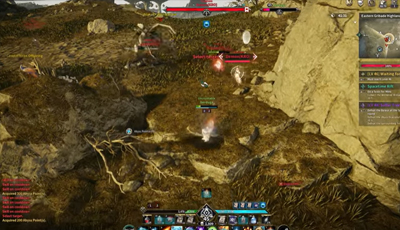
The Fundamentals of Faction-Based Battles
· The Essence of Faction Structure and World Conflict Mechanisms
In 《Aion 2》, the core of faction-based battles is a "power struggle structure." Players are divided into different factions, and these factions continuously clash on an open map. This conflict isn't a fixed battlefield but a dynamic activity covering the entire world map. For example, certain areas become hotspots of contention, resource points periodically refresh, and factions must gain an advantage through capture or defense. The essence of this mechanism isn't simple PvP, but rather "resource-driven warfare." Whoever controls more areas gains more resources for growth, further strengthening their overall combat power. This design makes faction battles continuous, rather than a one-off event.
· The Shift in Combat Objectives from Kills to "Area Control"
Traditional PvP focuses more on kill counts, while faction battles emphasize area control. Players' goals in battle aren't simply to eliminate enemies, but to complete strategic tasks such as capturing points, defending, or escorting. For example, capturing a stronghold provides continuous resource gains, while successful defense maintains faction advantage. This mechanism makes battles more team-based than individualistic. Even a player with exceptional killing skills cannot single-handedly change the course of a battle, as victory depends on the overall execution of the strategy.
· Dynamic World Events Drive the Battle Pace
Faction battles are not free-for-all brawls; they are driven by system events. For example, world boss spawns, resource wars, or special area events all trigger faction conflicts. This design forces players to plan their activities around specific timeframes, rather than engaging in random combat.
Therefore, faction battles are essentially a gameplay structure driven by both time and space.
How do players enter the combat system?
· The First Step into the Faction System Through Basic Quests
After completing the basic main storyline, players will gradually unlock the faction system. The system will guide players to join a faction and participate in basic faction quests. These quests typically include simple area patrols, resource gathering, or low-intensity combat, aiming to familiarize players with the faction map structure and basic rules. The focus at this stage is not on combat intensity, but on building players' understanding of the faction system.
· Mid-Game Participation in Small-Scale Conflicts and Resource Competition
Once players have acquired certain equipment and levels, they will enter a phase of small-scale faction conflicts. At this stage, battles revolve around resource points, such as capturing mines, defending teleport points, or disrupting enemy resource gathering. This phase emphasizes teamwork rather than individual damage output. Players need to learn to follow the team and execute tactics according to commands, rather than acting alone.
· Late Game: Large-Scale Faction Wars and World-Class Confrontation
In the late game, faction battles escalate into large-scale wars, including battles involving dozens or even hundreds of players. Battles are no longer confined to localized areas but occur simultaneously across multiple maps. Players need to clearly define their roles, such as damage dealer, support, or controller, and play a role within the team's structure. The core of this phase is not "winning a battle," but "continuously influencing the balance of power."
How to Improve Combat Efficiency?
· Class Roles and Team Division of Labor
The most important technical factor in faction battles is class division of labor. Different classes have different responsibilities; for example, front-line tanks are responsible for absorbing damage and controlling the battlefield, ranged classes are responsible for damage output, and support classes are responsible for healing and buffing. A complete team must maintain structural balance, otherwise it is easy to collapse in team battles. Players need to understand their class role, rather than blindly pursuing maximum damage output.
· Terrain and Combat Space Utilization Strategies
Faction battle maps typically feature complex terrain, such as elevation differences, narrow passages, and open areas. Properly utilizing terrain can significantly impact battle outcomes. For example, restricting enemy movement in narrow passages or using high ground for ranged suppression are common tactics. Victory in battle is often determined not by numerical values, but by the ability to utilize space effectively.
· Skill Rhythm and Team Battle Timing
In large-scale battles, the rhythm of skill release is extremely important. Releasing control skills too early may cause them to fail at crucial stages, while releasing them too late may result in missed opportunities. Teams need unified command and rhythm, concentrating on releasing burst skills at key moments. This rhythm control ability is one of the core technologies of high-level faction battles.
The "Core Materials" Supporting War
· Basic Combat Resources and Daily Contribution System
Players can obtain basic contribution points by participating in faction battles. These resources are used to exchange for basic equipment or enhancement materials. Although the individual gains are not high, long-term accumulation is crucial and is an important part of growth.
· Rare Loot and High-Value Drop Mechanism
Rare resources, such as high-level equipment materials or special enhancement items, will drop during large-scale faction wars or world events. These resources are usually high-value and a key source of power enhancement. Acquiring these resources typically requires participating in high-risk battles, making competition extremely fierce.
· Faction-Specific Exchange and Strategic Resource System
The faction system also provides a dedicated exchange mechanism where players can use contribution points to exchange for special equipment, skill books, or enhancement materials. These resources are usually unavailable through normal dungeons, thus possessing strategic significance. This design strengthens players' long-term motivation to participate in faction wars.
· Team-Based Resource Sharing Mechanism
Some resources are distributed in a team-based manner, such as battlefield rewards or stronghold gains. This mechanism encourages players to cooperate as a team rather than act alone, thereby strengthening the overall cohesion of the faction.
The faction war gameplay in 《Aion 2》 is essentially a long-term competitive system built around "resources, space, and teamwork," rather than a simple PvP mode. Through faction divisions, the game world becomes a continuously evolving war ecosystem where every player's actions impact the overall situation. Factional battles are not simply about "winning a single battle," but a continuous cycle. Players must constantly participate in combat, acquire resources, upgrade equipment, and then engage in even more intense conflicts. This cyclical structure gives the game long-term appeal while also strengthening the cooperative and competitive relationships between players.