











English


Guide
How to Get Mythic Uniques in Diablo 4




Mythic Uniques are the chase items that keep endgame builds alive. Everyone wants them, nobody gets enough of them, and the gap between a build with one Mythic and a build with three is enormous. The thing most players get wrong is treating these as pure luck. They're not. There are reliable paths to them, and once you understand where the sparks come from, the whole grind stops feeling random.
The Mythic Pool Worth Chasing
Not every Mythic Unique is worth your time, and knowing which ones matter saves you from farming for the wrong thing. Shroud of False Death is a chest piece that grants plus one to all passive skills, which makes it one of the most flexible items in the game. Almost any build can slot it and benefit. Heir of Perdition is a helm that pushes damage and critical strike chance to aggressive levels, and it rewards builds that can keep pressure up. Shattered Vow is a polearm built around damage over time and an execute mechanic, so it fits dot-focused setups more than burst builds.
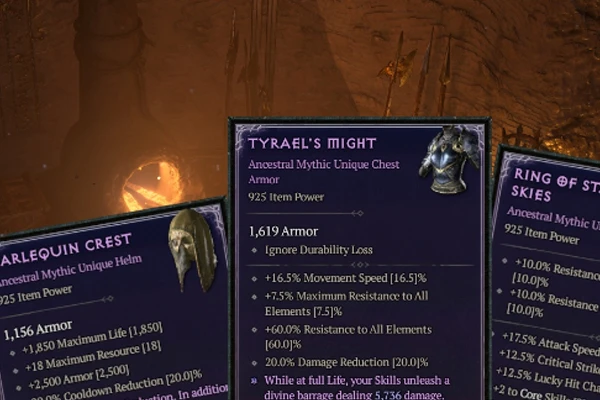
The older Mythics are still in the pool and still worth having. Harlequin Crest, Andariel's Visage, The Grandfather, Ring of Starless Skies, and Tyrael's Might all drop alongside the newer pieces. They haven't been left behind by the expansion. If you pull any of them from a boss, it's a win.
Lair Bosses Are the Core Farm
Boss farming is where most Mythic Uniques actually come from, and it's the activity you'll repeat the most. The important thing is knowing which bosses matter and how to keep the cycle going:
- Grigoire, Lord Zir, Varshan, and Beast in the Ice are the entry bosses. Their summoning materials are easier to come by, so they're good for volume, and they still roll a Mythic chance on every kill
- Duriel and Andariel are the heavier hitters. Their Mythic drop rates sit above the other Lair bosses, which makes them the priority when you have the materials to summon them
- Torment tier matters more than most players realize. Every Lair Boss can drop Mythic Uniques, but the odds climb as you push from Torment I up through Torment IV. Don't farm bosses on a low tier and wonder why the drops feel dead
- Group rotations are the efficient play. Four players each contributing materials means four boss kills for the cost of one, and everyone gets a shot at the drop table
The pattern I settled into is simple. Farm materials during normal play, bank them, then run boss rotations with a group when the pile is big enough to matter. Don't summon one boss at a time the moment you scrape together the materials. Patience turns a slow trickle into a real farming session.
The Pit and Passive Sources
The Pit deserves its own mention because it sits outside the boss loop, and it pulls double duty in the current endgame. This is where glyph leveling happens now, so you're already running it for Paragon progress whether you realize it or not. At high tiers, The Pit also drops Mythic Uniques directly, which means every Mythic that falls there is a bonus stacked on top of progression you needed anyway.
Nightmare Dungeons fill a different role now. They're your main source of Obducite, the material Masterworking burns through, so they matter for gear but they're not where you hunt Mythics. Keep the two separate in your head and your sessions stop feeling directionless.
Beyond bosses and The Pit, Mythic Uniques can show up from general endgame sources. Tree of Whispers caches carry a small chance, and random drops from high-tier content happen now and then. Don't plan around these. Treat them as the occasional surprise that tops up your spark bank when a duplicate drops and you salvage it.
Crafting With Resplendent Sparks
Crafting is the part that turns bad luck into a plan. Here's how the spark economy actually works:
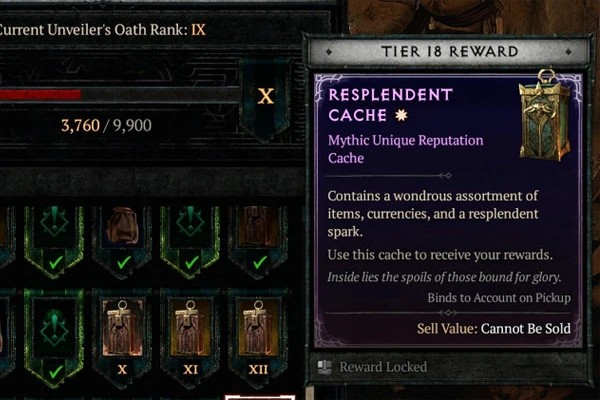
- Salvaging a Mythic Unique gives you one Resplendent Spark. A duplicate Mythic isn't a failure. It's a step toward the piece you actually want
- Regular Uniques do not return sparks when salvaged. This trips up a lot of new players who assume every Unique is the same. Only Mythic Uniques produce sparks
- At the Jeweler, two Resplendent Sparks plus five million gold plus the required runes craft a specific Mythic Unique of your choice. Gold and runes are real costs here, not an afterthought, and specific crafts ask for specific rune sets
- The runes are the hidden cost. You need particular runes for each craft, and they come from Lair Bosses, the Kurast Undercity, and trading with other players. Stockpile them before you worry about sparks
Crafting changes the psychology of the whole chase. A bad boss session still advances you, because every duplicate Mythic becomes a spark, and every spark moves you closer to a guaranteed craft. You're never truly stuck unless you're sitting on zero sparks and zero runes with no bosses left to kill.
A quick look at how the main paths compare:
Path |
Core Benefit |
Efficiency Tip |
|
Duriel / Andariel |
Highest base Mythic drop rate |
Run 4-player rotations, one set of materials per four kills |
|
Entry bosses (Zir, Varshan, Grigoire, Ice) |
Materials are cheap and plentiful |
Good for volume and rune farming on the side |
|
The Pit |
Glyph leveling plus direct Mythic drops |
Mythics are a bonus on top of progression you already need |
|
Jeweler crafting |
Guaranteed specific Mythic |
Save two sparks plus the runes, target craft instead of gambling |
Make the Grind Sustainable
The biggest risk with Mythic farming isn't bad luck. It's burnout. I've seen players chain boss rotations for hours, go dry, and quit the season entirely. That's the wrong way to run a long grind.
The better approach is to weave Mythic farming into the rest of your play instead of making it the only thing you do. Run Helltides for materials, bank Grim Favors on the side, hit a few Nightmare Dungeons for Obducite, and cap it off with a boss rotation when the materials are ready. You still make steady progress toward Mythics, but no single dry spell ever ruins your whole session.
Keep a running count of your sparks, runes, and gold. When you hit two sparks and the runes for a craft you actually want, make it. If you're sitting on one spark and wondering whether to craft or wait, wait. A targeted craft beats a hasty one every time, and the pieces you salvage along the way will keep the spark bank moving.


