











English


Guide
Diablo 4 Leveling Gear Recommendations




Every season launch, the same question pops up in guild chat within the first 48 hours: what gear should I actually be chasing while I'm still leveling? It's a fair question. The gearing system in Diablo 4 has enough layers now — Aspects, Codex upgrades, Tempering, Masterworking, breakpoints — that it's easy to overthink it and waste materials on items you'll replace in two hours.
After running a fresh character through every season since launch and making pretty much every gearing mistake you can make, I've settled on a few principles that save time and keep the upgrade pace steady. Nothing groundbreaking, just stuff I wish someone had told me earlier.
Your Weapon Sets the Pace for Everything Else
Most players obsess over pulling together a full set of gear before they even start pushing content. I used to do the same thing. Then I spent a season tracking how much time I actually saved by rushing weapon upgrades and ignoring everything else — it turned out weapon power alone was responsible for something like 70% of my clear speed.
The logic is straightforward. Your weapon's base damage is the number every skill multiplies against. A 20% higher weapon damage roll doesn't just give you 20% more damage — it gets multiplied by your skill ranks, your passives, your paragon bonuses. The gap between a weapon that's 50 item power behind and a current one is way bigger than most people realize.
When you're leveling through the campaign and early endgame, check your weapon slot every few levels:
- If your weapon is more than 10 item levels behind what's dropping, replace it immediately — even if the new one has worse affixes
- After level 60, check every 5 levels or after each Helltide session
- Don't enchant or reroll weapon stats until you're into Torment difficulty. You'll replace it too quickly for the gold to be worth it
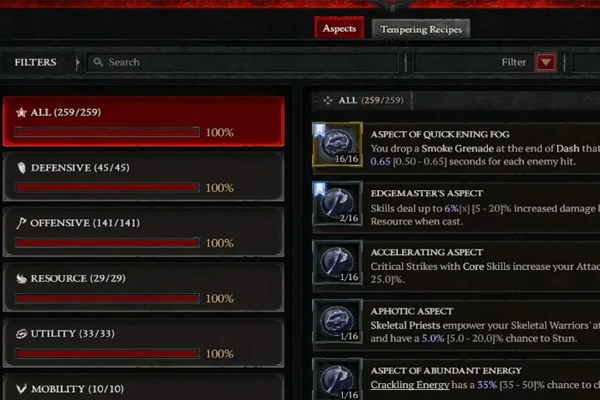
The amulet slot deserves similar attention. Aspects imprinted on amulets get a 50% power bonus, and on two-handed weapons a 100% bonus. If your build's damage hinges on one specific Aspect, put it on your amulet or weapon and don't move it until you find a significantly better base.
One thing I see newer players do all the time: they find a decent legendary weapon at level 40, imprint their best Aspect on it, and refuse to let go until level 65. By that point their weapon damage is so far behind that every pull takes twice as long as it should. Sentimentality with gear is the silent killer of leveling speed.
Don't Sleep on Yellow Items — They're Cheap Bases for Imprinting
The legendary beam tricks your brain. It drops, your eyes light up, and you instantly equip it. But a yellow item with two solid affixes for your build, combined with a Codex Aspect you already have unlocked, often outperforms a random legendary whose affixes don't line up at all.
Rares are everywhere. They drop in piles from every activity. That abundance is the real advantage — not some imaginary affix count advantage over legendaries. Pick through them, keep the ones with stats your build actually uses, and imprint your key Aspect at the Occultist. What you get is a legendary tailored to your build for the cost of some Veiled Crystals and gold. Way more reliable than praying for the perfect legendary to drop.
And because rares are so common, enchanting them to fix one bad affix is cheap early on. You're not burning millions of gold chasing a perfect roll on a piece you'll outlevel soon anyway.
Salvage everything else. Don't sell gear for gold early — you need crafting materials far more than gold during the leveling phase. Forgotten Souls, Veiled Crystals, and Baleful Fragments become bottlenecks fast once you start enchanting and Masterworking. Gold you can farm later. Materials gate your progress much longer.
The Codex of Power also makes this approach stronger over time. Every legendary you salvage with a higher roll of an Aspect permanently upgrades your Codex entry. Target dungeons early to unlock baseline versions of your build's core Aspects, then farm Helltides and Nightmare Dungeons to find better rolls and upgrade them. Your account's Codex gradually becomes a library of near-perfect Aspects you can imprint at will.
Helltides Are Your Real Gear Factory
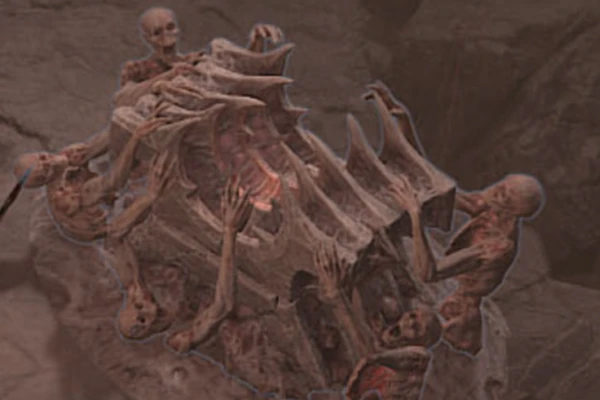
If you're trying to gear up through regular dungeons and world content, you're working way harder than you need to. Helltides are the actual gear pipeline — available from Normal difficulty onward, so even a fresh level 60 character can jump right in.
The math is hard to argue with. A single Mystery Chest costs 275 Aberrant Cinders and drops five to ten legendaries, plus Forgotten Souls and a solid chance at Ancestral or Unique items. For comparison, running regular dungeons might net you two or three legendaries in the same time.
A few things that make Helltide farming smoother:
- Prioritize local events. Orange circles on the map spawn dense waves — more cinders per minute than wandering around killing scattered packs
- Max out your Threat Meter on purpose. The ambush at the end spawns Hellbornes that drop excellent loot
- Spend cinders as you go. Death costs you half, and cinders expire when the Helltide ends. Hoarding until the last minute is how you lose a full chest's worth of progress to one bad elite pack
- Mystery Chests now show up directly on the in-game map, so you don't need external trackers to find them anymore
The Season of Death Awakening added Pandemonium Ruptures inside Helltides, which feed into Glints of Hope Caches for Pandemonium Fragments and Superior Lair Keys. It creates a self-feeding loop: farm Helltide for cinders and Ruptures, use fragments and keys for boss runs, use boss drops to upgrade gear, go back into Helltide stronger and faster. Once you settle into that rhythm, gear upgrades come in waves rather than trickles.
The Codex of Power Is More Useful Than You Think
I ignored the Codex for my first two seasons. Didn't touch it. Figured it was some collectionist thing for completionists. That was a mistake — when I finally started using it, my leveling speed nearly doubled.
Your Codex is account-wide. Any Aspect you unlock or upgrade stays available for every character you ever make. The progression path:
- Complete the dungeon tied to your build's core Aspect. You get the baseline version permanently unlocked
- Every legendary you salvage with a higher roll of that same Aspect upgrades your Codex entry permanently
- Once the Codex version is good enough, imprint it onto any well-rolled rare — effectively crafting your own legendaries on demand
The 50% bonus on amulets and 100% on two-handed weapons applies to Codex imprints. So if you unlock a strong offensive Aspect and imprint it on a two-handed weapon, you're getting double value from a guaranteed source rather than waiting for a lucky drop.
Some Aspects only come from extraction — no dungeon unlocks. For those, you're at the mercy of random drops, and gambling Obols at the Purveyor of Curiosities is the fastest way to target them. Focus your Obols on the gear slot where the Aspect you need can roll, and don't spread them across multiple slots at once.
When to Spend Materials and When to Hold Back
Tempering and Masterworking are powerful gear progression sinks, but they're also expensive — and blowing all your materials on low item power gear you'll replace in a few hours is a classic new-player trap.
My rule of thumb after leveling a dozen characters through various seasons:
- Don't temper anything before level 60. You swap gear too fast
- Between level 60 and Torment, temper your weapon and amulet only. Those two slots return the most damage per material spent
- Only start Masterworking on items at 750 item power (fully tempered) or Ancestral items at 800 item power. Masterworking isn't even available below those thresholds, so don't save materials for it — you literally can't use them yet
- Not sure if a piece is worth it? Temper it first and run a few dungeons. Tempering is relatively cheap. If the item feels good after tempering, then consider Masterworking
The materials bottleneck is real. Forgotten Souls are Helltide-exclusive and you need them for both enchanting and Masterworking. Veiled Crystals disappear faster than you expect once you start imprinting Aspects regularly. If you're careful with spending through the leveling phase, you'll arrive at endgame with a healthy stockpile — and that stockpile is what lets you immediately push into higher Torment tiers instead of farming materials for another week.
One last thing about gold: don't reroll affixes more than two or three times on the same item during leveling. Each re-roll costs more than the last, and the gold curve gets steep fast. If you don't hit the stat within three tries, the item probably isn't the one. Move on and farm a replacement.


