












English


Guide
ARC Raiders Survival Tips Only Veterans Know




After two or three hundred hours in ARC Raiders, you start noticing something interesting — the players you fear most aren't the ones with godlike aim who land every headshot. They're the ones you never see the entire raid, who somehow always manage to cut off your extraction route perfectly. These players operate on a completely different level when it comes to map knowledge, sound judgment, and gadget usage. A huge number of techniques in this game are never explained to you — not in the tutorial, not in the tooltips, not even on the loading screen tips. These mechanics, buried deep in the system layer, are the real dividing line between veterans and everyone else.
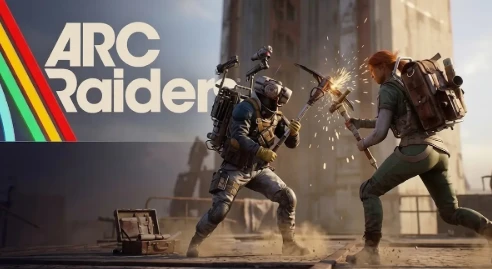
Hidden movement and sound logic the game never says a word about
ARC Raiders' sound design runs far deeper than most people realize — it's not just about what you can and can't hear. The sounds you produce are governed by a surprisingly complex set of rules. And movement isn't just about getting from A to B either. Some techniques can single-handedly bump your survival rate up an entire tier.
- Your backpack weight directly affects how much noise you make. Below fifty percent full, you're nearly silent when walking. Between fifty and eighty percent, a faint rattling starts creeping in. Above ninety percent, completely stuffed, every step clanks audibly — audible through walls. There is zero UI indicator telling you "you're loud right now," but every veteran knows: when you've looted enough, start drifting toward extraction. Not because greed kills, but because a full backpack turns your own footsteps into a beacon for every player in the area.
- Sliding down stairs along the handrail is significantly quieter than sliding down the stairs themselves. A normal staircase slide produces enough noise for nearby players to roughly triangulate your position. But sliding down the handrail side suppresses the sound almost entirely. This detail is especially useful in multi-story buildings — think Spaceport and Buried City interiors — where you can move between floors without broadcasting your presence.
- If you can grab a ladder or zipline during a fall, fall damage is completely negated, regardless of height. You need to face the ladder or line and hold the interact key as you pass it — just tapping it as you fly past won't register. It sounds like a frame-perfect trick, but ladders and ziplines are everywhere on building exteriors. Get comfortable aiming your descent toward them and holding the button early, and this becomes second nature. It's an absolute lifesaver when someone's chasing you off a high ledge — your pursuer either hesitates and loses you, or jumps without grabbing and breaks their legs, while you hit the ground at full health and keep running.
The information value of sound and movement in this game is massively underestimated by new players. A lot of people think "I'm bad at mechanics so I die a lot." But veterans don't survive longer because of faster reactions. They survive because they listen more. They hear your backpack jingling and they already know roughly how far you are, which direction you're heading, how much loot you're carrying, and whether you're worth coming after. You haven't even seen them yet, and they've already mapped out your entire movement route in their head.
ARC machines look invincible — but every single one has a weakness veterans exploit
ARC machines aren't designed to be beaten through raw firepower. Every type has specific weak points, hard counters, and trigger behaviors. Learn them and your efficiency multiplies. Don't learn them and they're bottomless ammo sinks and respawn token devourers.
- Stick a Search Coil onto a Stone Bombardier's rear weak spot and it'll be locked down for roughly twenty seconds. Twenty seconds in ARC Raiders is an eternity — enough time to revive a downed teammate, clear surrounding trash mobs, circle behind it, and dump every round you have into its weak point. The Search Coil itself is something most players mentally file under "scout tool" and never think to use as crowd control. Same principle: aim a Snap Hook at a Rocketeer's propellers and it's an instant kill. You don't even need to fire a single shot.
- Fire damage calculates differently from what the stat panel shows. The numbers claim five damage per second for ten seconds — fifty total. In practice, standing in fire for the full duration can nearly kill you from full health with a medium shield. The hidden mechanic here is that sprinting extends the burn — the more you run while on fire, the longer it ticks. Stop sprinting immediately. Standing still or walking normally lets the fire expire fastest. Rolling does not remove it. Also, fire damage never stacks — throwing multiple incendiary grenades at the same target only expands the fire's area, not the damage per tick. Knowing this one fact doubles your throwable efficiency overnight.
A veteran's entire approach to ARC enemies is the inverse of a new player's. A new player sees a machine, shoots, and runs if it goes badly. A veteran sees a machine and immediately thinks: where is the weak point on this model, and do I have the right tool on me to counter it. It's not an aim gap. It's an information gap. Once you internalize the counter for each ARC type, a lot of fights that used to feel impossible suddenly become trivially easy.
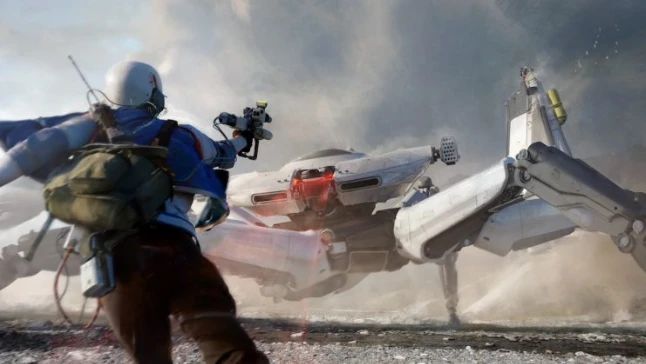
Gadget combos are exponentially stronger than using each gadget alone — but most people only use their basic functions
The gadget system in ARC Raiders is designed with far more depth than it lets on. The majority of players use gadgets at surface level — smoke grenades block vision, blaze grenades burn things, barricades block doors. But veterans know that the interactions between gadgets are where these tools truly become dangerous.
- A smoke grenade isn't just a panic button for running away. Throw smoke at an angle that makes the enemy think you're pushing one direction, then immediately flank the other way while they're staring at an empty cloud. Even better — if a teammate is downed in the open, pop smoke on their body before going for the revive. The enemy knows you're in there somewhere, but they can't see exactly where, and that half-second of hesitation is often all you need to get the revive off and both of you out.
- Barricades aren't just for blocking doors. Position one at the end of a ladder or zipline and anyone following you crashes straight into it. Place one directly in front of an Arc Turbine and hug it closely — the Turbine's ranged attacks get absorbed by the barricade, effectively giving you a mobile shield that can eat boss-level damage. Barricades can also let you solo-access rooms that normally require two players — place one on a ledge edge, climb onto it, and you've got just enough extra height to reach switches that were previously out of reach.
- A Blaze Grenade can destroy traps through walls — Jolt Mines, Gas Mines, Noisemakers. As long as the wall isn't too thick, one grenade tossed against it clears everything inside without you ever entering the room. This is a mandatory safety check veterans perform before pushing into any suspicious enclosed space. Make it a habit to toss one against the wall before opening any door, and you'll save yourself from countless accidental mine-trigger death screens.
The true ceiling of the gadget system isn't about how many different types you carry. It's about how many unintended uses you know for each one. The official in-game description for every gadget only tells you the most basic application. Veteran knowledge spreads entirely through word of mouth — which gadget produces what chain reaction in which scenario, which mechanics can be bypassed, how to manufacture asymmetrical information advantages. None of this appears in any official documentation. But it determines whether you walk out of a situation alive or become someone else's care package.
The most fascinating thing about ARC Raiders is this — its systemic depth is buried so deep that you'll hit a hundred hours thinking you've figured the game out, then hit three hundred hours and realize everything between hour one-fifty and hour two-fifty was you fumbling around in the dark. New players learn how to shoot. Veterans learn when not to shoot. New players learn how to loot. Veterans learn exactly how full your backpack should be before you turn toward extraction. New players learn what each gadget does. Veterans learn how gadgets interact with each other. None of these things are particularly complicated on their own. But layer all of them together and you get a level of play that a new player can't even parse. Don't rush it. A few hundred hours from now, you'll find these things have become pure instinct — you'll see a scenario and the correct response will surface in your head before you've even consciously processed what you're looking at.


