











English


Guide
ARC Raiders Hurricane Weather Map Guide




The Hurricane weather condition that dropped into ARC Raiders at the end of February absolutely schooled me in my very first raid. With a tailwind at your back, your character feels like they're being shoved forward. Head into the wind and even walking becomes a struggle, and a grenade you throw can come flying straight back at you. This environment mechanic is not just a new weather effect slapped on top. It basically flips the entire map's playstyle on its head. The route habits, engagement tempo, and looting order you'd built up all get thrown out the window the moment you step into a Hurricane map. This guide is me sorting through the holes I fell into and the patterns I figured out along the way, especially the places where first-timers get burned the hardest on their opening raid.
How the wind actually affects your movement?
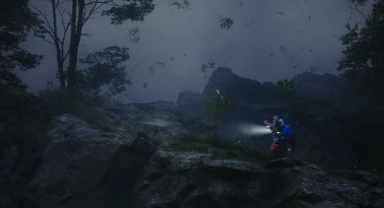
The wind is the core mechanic of the Hurricane map, and it's not a constant — the direction and strength shift from area to area and moment to moment, so you have to stay aware of what's moving around your feet and above your head.
- A tailwind is free speed. Running with the wind at your back noticeably boosts your movement, making traversal, repositioning, and shaking off pursuers a whole lot easier. So the first thing you do after spawning in is figure out which way the wind is blowing, and plan your route to ride with it whenever you can. It saves a surprising amount of time.
- A headwind can kill you. Running into the wind doesn't just slow you down, it burns through your stamina at a brutal pace. If an enemy locks onto you while you're fighting a headwind, running won't get you out — the more you run, the emptier your stamina bar gets, and eventually you're standing there taking hits with nothing left. The right move against a headwind is to find cover nearby instead of trying to outrun it.
- Throwables completely change behavior. The flight paths of grenades and smoke grenades get mangled by the wind beyond recognition, and the throwing muscle memory you built up is basically worthless in a Hurricane map. Throw a grenade into the wind and it might come right back and blow up in your face. Checking the wind direction before you throw is a habit you have to rebuild from scratch.
The wind mechanic, in plain terms, forces you to abandon the "just keep running" muscle memory and actually think through every step. Ride the tailwind to move, find cover in the headwind — that's the most basic and most important survival rule on this map.
Flying debris and the toll on your shield
The hurricane whips dust and debris through the air, and all of it keeps slamming into you. Your shield is the first casualty. It's passive energy armor, wrapped around you the moment you equip it, so there's no dodging the flying debris.
- The shield is passive. Once equipped, it automatically surrounds your character and absorbs damage — you can't manually raise or lower it the way you'd swing up a riot shield. On the Hurricane map, flying debris hammers you almost nonstop, and every hit makes your shield spit sparks while its durability ticks down, all while giving off noise. Those sparks and sounds are effectively a beacon in the sandstorm, telling everyone from a distance that someone is standing right there.
- Once your shield is drained, you have to top it back up with shield batteries, so on the Hurricane map you need to consciously budget your shield. The longer you spend exposed out in the open, the faster it bleeds out. Break long stretches of exposed travel into shorter legs, and don't be too proud to duck into cover and let it recover. It's not about having more shield — it's about making it last through the storm.
The shield becomes a subtle problem on the Hurricane map. On a normal map, it's the confidence that lets you push into a fight. On the Hurricane map, it keeps selling out your position. You can't put it away, so the only way to cut down on the sparks is to control your movement and your exposure time. That's harder than deciding whether to raise a shield, because what you actually have to change is the whole rhythm of how you move through the map.
Low visibility means relying on your ears, not your eyes
The biggest threat on the Hurricane map isn't the wind or the debris. It's that you can't see. Low-hanging clouds crush your sightlines in outdoor areas, and enemies can materialize out of the sand, giving you very little time to react.
- Outdoor visibility gets pushed down to almost nothing, and familiar landmarks become nearly unrecognizable. The old approach of navigating and spotting enemies with your eyes basically stops working, so you have to switch to reading audio instead. Footsteps, gunfire, and the sound of crates being opened — carried through the wind — become your eyes on this map. ARC enemies also tend to pop up out of nowhere, robots often appearing only when they're right on top of you. So you have to get used to moving and listening at the same time, and the moment you hear something off, break for cover and assess rather than pushing forward.
- Low visibility cuts both ways, and you can use it to your advantage. Kill your flashlight, keep your movement quiet, and stay off exposed ground — and enemies have just as hard a time spotting you. The safest positions on this map are often the wide-open spaces that look the most dangerous. The reduced visibility is both your threat and your cover, and it all comes down to who exploits it first.
This is something I only figured out after getting burned twice. You don't survive the Hurricane map by fighting harder. You survive it by listening more carefully and moving more quietly. "Keep your eyes on everything" has to become "keep your ears open to everything" on this map.
The relic caches the hurricane digs up
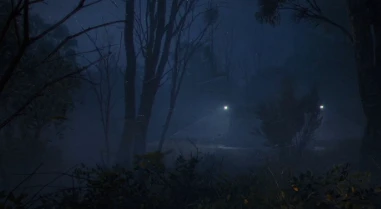
The one genuinely exciting thing about the hurricane is that it unearths First Wave relic caches that were buried underground. These caches don't show up on the map, and they give off a faint beeping sound when you're nearby — and their value runs well above a standard scavenge point.
- Relic caches can contain materials, weapons, and even blueprints, making them the best reason to run a Hurricane map. The caches themselves are small boxes, usually surrounded by debris the wind has kicked up, so they're easy to miss if you're not looking carefully. When you hear the beeping, stop and follow the sound slowly — it's almost always within a few steps.
- Since these caches don't appear on the map, not many players know about them yet, which means relatively low competition. But you can't let the temptation of a cache put you in a bad spot. Even as you're homing in on the beeping, stay aware of whether anyone else is moving around nearby. Hunting by sound is fine, but clear your six first.
Relic caches are the easiest thing in the game to tunnel on. You hear the beeping, forget about your surroundings, dive straight in to loot, and someone creeps up behind you — that happens constantly on the Hurricane map. The stronger the temptation, the more you need to keep your head.
The Hurricane weather is the first environment mechanic ARC Raiders has added that genuinely changes how the game plays at a fundamental level, not just a content update with a new coat of paint. It turns riding the tailwind, avoiding fights into a headwind, locating things by audio, and budgeting your shield into hard requirements rather than optional tricks. When you first pick it up, it will feel miserable. You'll feel like everything you practiced was wasted. But run it a few more times and you'll realize this mechanic actually lifts the game's strategic depth up a notch. The rush of a tailwind, the frustration of a headwind, the thrill of finding a relic cache — these are feelings a normal map can't give you. Don't fight the wind. Learn to work with it and use it, and you'll be the one walking out of the Hurricane map alive more often than anyone else.


