












العربية


Guide
Diablo 4 Runes Guide




Runes are one of those Diablo 4 systems that only opens up once you own Vessel of Hatred, which is why a lot of players reach endgame without ever touching them. They are worth learning though, because they sit at the center of both powerful Runewords and Mythic Unique crafting. Here is how runes work, where they drop, and which ones are actually worth keeping.
What Runes Actually Are
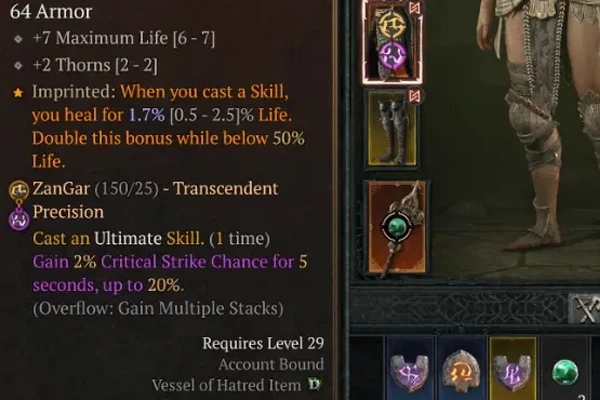
Runes are socketable items that came with Vessel of Hatred, and they sit in your Socketables tab right next to gems. The first thing to understand is that they split into two types that have to work together.
- Runes of Ritual set the trigger, the action you have to perform for the runeword to start charging.
- Runes of Invocation set the effect, the payoff that fires once enough charge builds up.
They also come in three rarities. Magic runes are blue and common, Rare runes are yellow, and Legendary runes are orange and the ones everyone wants. A runeword is just one Ritual rune plus one Invocation rune socketed together, so you cannot use a rune on its own and expect anything to happen.
How Runewords Work
The interesting part is how a Runeword decides when to fire, and it runs on a hidden resource called Offering.
Your Ritual rune generates Offering every time you meet its trigger, whether that is casting a cooldown skill, drinking a potion, or standing still while fighting. Once enough Offering builds up, the Invocation rune pays out its effect. Easier triggers give less Offering, harder triggers give more, and the cost of the effect scales with how strong it is. Some runes even have an Overflow bonus when you overcharge past the cost.
You can socket runes into helmets, chests, legs, and two-handed weapons, since those are the slots with two sockets. One-handed weapons only carry one socket, so they cannot hold a Runeword, and most players keep their runes in armor anyway because weapon gems are too strong to give up. You can run up to two Runewords at a time, and you cannot socket the same rune twice, which forces you to think about the pair instead of just stacking the best effect. There is a purple bar over your action bar that fills as Offering builds and empties when the effect fires, and watching it for a few fights teaches you more than any guide.
How to Get Runes
Runes do not start dropping until you own Vessel of Hatred and finish the campaign quest Fundament of Faith, so anyone on the base game is locked out entirely.
After that, they drop from almost everything, but a few sources are reliable enough to plan around.
- Whisper caches guarantee at least one rune.
- World Bosses drop a few runes every kill.
- Kurast Undercity with a Rune Tribute is the most consistent farm, especially on higher Torment tiers.
- Helltide chests and the Blood Maiden are solid side sources.
- Bosses in general are a steady stream once you are farming the ladder anyway.
Higher difficulty pushes the odds toward Rare and Legendary runes, so the same activity on Torment IV pays out better than it does on lower tiers. The Blood Maiden is worth hitting when you are already in a Helltide for Living Steel, since she drops runes on top of her usual loot. That is why rune farming and boss farming usually happen at the same time.
What to Do with Runes
Runes have two real jobs, and knowing which one you are after changes how you treat every drop.
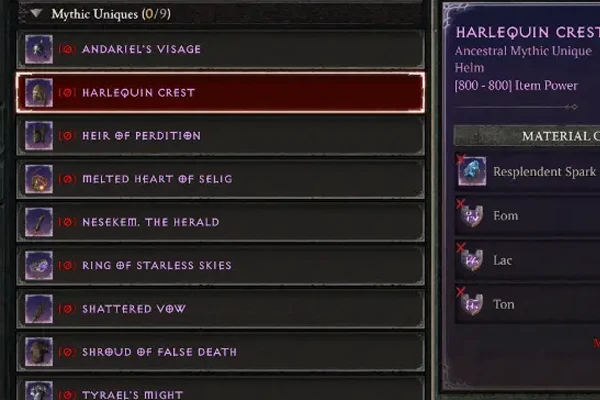
The first is Runewords, where a good Ritual plus Invocation pair gives your build a passive effect it would not otherwise have. The second is Mythic Unique crafting at the Jeweler, where specific runes act as currency alongside Resplendent Sparks to craft a targeted Mythic instead of gambling for a random one.
There is also a transmute option at the Jeweler. Three runes of the same rarity can be combined into a new random rune, usually staying at that rarity with a small chance to jump up a tier. Most players treat it as a way to clean up inventory rather than a real progression path, since the upgrade odds are low enough that you should not build a farm around it.
Which Runes Are Actually Worth Something
The rune market is real, and it is more about demand than color.
Some Legendary runes are cheap because their effect is niche, while certain Rare runes hold value because a popular Mythic recipe needs them. The classic example is Lith, which feeds into the Tyrael's Might craft and has sold for hundreds of millions of gold at times. That is the thing about runes: a rune is only worth what a recipe or a build is willing to pay for it.
Runes are also tradeable, so if you are sitting on a rune you will never socket, someone else wants it. Check what your build needs and what the current Mythic recipes demand before you vendor or transmute anything, because the difference between a rune worth five million and one worth three hundred million is often just a recipe you have not looked at.


