











English


Guide
ZZZ Ultimate Release Timing Techniques




The most frustrating moment in ZZZ isn't getting killed by a boss. It's charging up your Decibel meter for what feels like forever, pressing the ultimate with total confidence, and then watching the boss sidestep as an entire screen of damage numbers slams into empty air. Whiffing an ultimate isn't exactly rare in action games, but in ZZZ the cost is amplified — your Decibel value resets to zero, you have to build it back up from scratch, and the Daze rhythm you'd carefully planned out is completely wrecked. So the ultimate really needs to be broken into two halves: one half is judging when to spend it, and the other half is making sure it actually connects when you do. We've talked about the first half before. This article is about the second half — how to land your ultimate clean and steady, so it never turns into a wasted press.

How whiffed ultimates actually happen?
Most people blame their own reflexes after whiffing an ultimate, but if you actually think back, the vast majority of misses come from the same handful of causes. Hand speed has almost nothing to do with it.
- The target is in motion, and your damage snapshot was locked to where it was before it moved. Plenty of bosses and elites in ZZZ like to lunge and sidestep. If you fire the ultimate a split second before it dashes, the animation is only halfway through and the target has already repositioned. The damage lands on nothing. That's not you being slow — it's you picking a target right as it was about to move.
- Melee ultimates are direction-locked. If the enemy circles around behind you, the damage whiffs just the same. This is especially true for finishers with a narrow attack arc — if the target has already slipped behind you at the moment of release, it's simply outside the hitbox, no two ways about it.
- Some whiffs are pure misfires. The instant the Decibel meter caps out, a twitch of the finger or an overly tight controller button, and the ultimate goes off — landing right in the middle of the target's i-frame or movement window.
So the root cause of most whiffs isn't mechanical error. It's not reading the target's state before you commit. Build one habit — taking half a second to confirm the target isn't about to move before you press — and your whiff rate drops by more than half.
The preparation in the seconds before you ult
The ultimate isn't something you dump the moment the meter is full. The little bit of preparation before you press decides whether the shot actually connects. None of this needs fast hands. It's all awareness.
- First, confirm the target's action state. You can't casually drop an ultimate while a boss is mid-skill, mid-lunge, or stuck in a stagger animation. The safest window is when it's staggered, in Daze, or in that half-second pause right after it finishes an attack string. That window is short, but as long as you offset your ultimate from the enemy's attack rhythm, the hit rate is completely controllable.
- Check where your teammates and enemies are standing. You're invincible during the ultimate animation, but the moment those i-frames end you're exposed again. If you're surrounded by a ring of mobs when you fire, you'll get swarmed the instant the animation finishes. A quick glance at your own feet before pressing is the highest-value action you can take.
Those two seconds before you press are essentially a fast judgment call: "Will this whiff if I fire right now?" The more practiced that call becomes, the steadier your ultimates get. Flip it around, and the people who whiff constantly are almost always the ones who skip those two seconds and just mash the button.
The follow-up after the ultimate lands
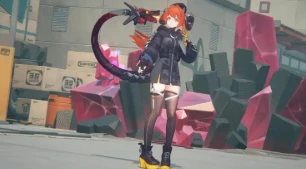
The ultimate doesn't end the moment it lands. The choice you make the instant the animation finishes is where the real output gap opens up. A lot of players treat the ultimate as an isolated burst, then stand around waiting for the next input — which is exactly how you waste most of its value.
- The instant the ultimate animation ends, the game lets you chain straight into your next action — there's no recovery lock you need to actively cancel. What matters here isn't execution, it's judgment. If you fired during a Daze window, glance at how much Daze bar is left the second it lands. Still a decent chunk? Immediately swap back to your main DPS and keep dumping. About to run out? Pull back and create distance, or swap in your stunner to start charging Decibel again. That one judgment call decides whether you milked the full Daze window or threw away half of it.
- Once the ultimate fires, your Decibel resets to zero. From that moment on, every offensive action is already building toward the next one. If your squad charges Decibel quickly enough to ult two or three times in a fight, then after each one you need to consciously plan: who's charging the next bar, and who gets it once it's full. Decibel cycle management starts the second your ultimate lands — not when the meter fills back up.
The ultimate is never a standalone action. It's a node in your overall output loop. Two seconds of target reading before, a clean connection during, an immediate follow-up judgment after — link those three steps together and your ultimate pays out consistently, instead of relying on luck.
The ultimate in ZZZ, at its core, is a move that trades resource for damage. The resource is three thousand Decibel. The damage is whether you can actually convert those three thousand points into real output. A lot of people get stuck on "when do I ult," but the real gap is in the two details after that — the two-second read before you press, and the follow-up choice after. Neither takes much mechanical skill. They're pure habit. Build them, and you'll notice that with the same ultimate and the same character, your damage curve runs visibly steadier than everyone else's. Fewer whiffs, smoother rhythm, and the few seconds you shave off in Shiyu Defense — that's exactly how you earn them, one small habit at a time.


