









English


Gameplay
POE2 Solo Self-Found League Starter: What Should You Choose?




The biggest difference between SSF and trade league isn't a missing feature. It's the moment you drop a unique you can't use and have to disenchant it into fragments. It's needing one specific support gem and not being able to search the market — you have to go farm it yourself. This "you're on your own" pressure breaks a lot of builds that cruise through trade league, because their baseline power relies on a few cheap uniques. SSF doesn't test your mechanical skill. It tests whether a build can function on absolutely nothing. Here are several verified SSF starters, not ranked by power, but by what kind of player you are.
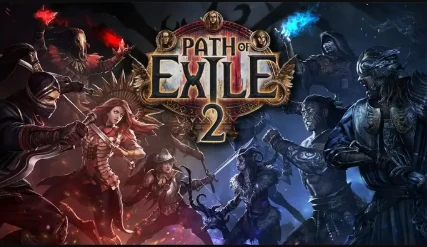
Three builds that don't care about gear — use whatever drops, and it still works if nothing does
Some builds are designed around the idea of "assemble the gear first, then take off." Those builds and SSF are fundamentally incompatible. What SSF needs is a skill system where gear is a bonus, not a requirement — base damage comes from gem levels, defense comes from the passive tree rather than specific items, and the core mechanics function without a single unique.
- Pure minion builds have a unique advantage in SSF — most of the gear pressure gets offloaded onto your summons. The Witch starting area gives you access to skeleton-based minions early in the campaign, and those same minions can carry you straight into the Atlas without ever swapping your core skill setup. The build only really needs one good weapon for your minion stats — every other gear slot can be pure defense. The hidden superpower of minion builds is boss fights: your body spends the entire fight focused on positioning while your minions tank and the damage ticks on its own. This matters disproportionately in SSF, where one death costs experience and six deaths kicks you out of the map. There's no "whatever, I'll just buy another map" safety net.
- The Mercenary grenade path is one of the smoothest campaign-to-Atlas progressions in SSF. Explosive Grenade for packs, Gas Grenade for stacking debuffs, Oil Grenade for laying ignition zones — the cycling logic between the three isn't complex, but the impact feels solid. Crossbows have a built-in advantage in SSF: high base damage. Grenade skill level plus your weapon's attack stat is the damage formula. You don't depend on crit rate or crit damage, which are gear-driven multipliers. There are documented SSF runs where players cleared all endgame content in under twenty hours using pure grenade setups, with every piece of gear either picked up off the ground or self-crafted.
- Titan's slam-based melee path is the least gear-dependent melee option in SSF. Big two-handed mace skills that deal single massive hits don't need fast attack speed, don't need crit, don't need any fancy unique interactions — just a mace with high physical damage. The Titan ascendancy gives you built-in durability through armour and life, which means your passive tree handles defense while your weapon handles offense. Clear packs with area slams, boss with your hardest-hitting single-target skill. The gear requirement is a two-handed mace with high physical damage — no specific mods, no unique required, and you can craft one yourself using basic currency.
What these three directions share is this — you don't need to "assemble a gear set" before starting. Use what drops. If nothing drops, you still push maps. The real fear in SSF isn't any particular boss. It's getting halfway through a build and realizing the core item it requires will never drop for you, and now your entire character is stuck in limbo. Pick a build with strong self-sufficiency, and at least you'll never find yourself halfway through progression wondering why your character suddenly feels crippled.
If you want mapping speed — these two are fast and don't ask much from your gear
If "safe" isn't your top priority, or you're willing to trade a few extra early deaths for faster late-game speed — these two directions are the fastest mappers in SSF with gear requirements that stay within realistic bounds.
- The Ranger bow path, built around projectile skills and evasion, is currently the fastest mapping archetype in SSF. The core advantage is simple — ranged characters kill enemies before they reach you, which means you clear maps faster and take less damage than melee builds with equivalent gear. Bow skills that convert physical damage into elemental damage are particularly good in SSF because they scale off your weapon's physical DPS, not off specific elemental mods that are harder to craft. A bow with decent physical damage, picked up during the campaign or crafted with basic currency, carries you comfortably into mid-tier maps.
- The crossbow Mercenary mentioned above has a faster variant that focuses more on direct-fire skills rather than grenade cycling. Galvanic Shards for clear, a high-damage single-target bolt for bosses — the build strips away the grenade timer delay and gets you a more immediate damage response. The trade-off is that this faster variant is squishier than the grenade version, but in SSF, squishy builds force you to learn positioning early, and positioning is the only defensive stat that equipment can't gate.
There's an implicit trade-off when you chase speed in SSF — you have to accept dying more in the early game. Both of these archetypes rely on evasion and footwork rather than true hard mitigation layers. But once you push through the "why do I keep dying" phase, the mapping speed of these builds will bring you currency and gear accumulation at a rate that tankier builds simply can't match.
A few fundamental truths about SSF — internalize these before you pick a build
Only a small fraction of SSF's difficulty comes from build choice. Most of it comes from how you manage your resources. These points aren't about which build to pick. They're about avoiding that gut-punch moment where you realize you've wasted all your resources and your character is going nowhere.
- Gem levels matter more than gear mods. In trade league, you search the market for a perfect weapon. In SSF, you pick up what drops. So prioritize builds where damage scales off gem levels — grenades, minions, and slam skills all fall into this category. One gem level often provides more damage than replacing every piece of gear you're wearing. Spend your gold on upgrading skill gems first, not on gambling for equipment.
- Don't burn your crafting currency carelessly. The basic orbs you find during the campaign are your entire net worth in SSF. Every piece of gear you wear should be crafted to a functional level before you equip it — don't walk into the Atlas wearing items straight off the ground with no modifications. Check NPC vendors every time you return to town — they occasionally sell gear with valuable mods for a few gold coins that will carry you through several chapters. Three junk rares of the same base type thrown into the reforging bench produce one new unidentified rare. Maximize every single drop. Don't use your rarest orbs on mediocre base items — save them for when a genuinely good crafting base drops, because you won't get another chance anytime soon.
POE2's SSF mode has no leaderboard and no extra rewards. People choose it purely because they enjoy the feeling of "I earned this myself." When you pick SSF, you accept upfront that some items may never drop for you, and some builds' damage ceilings may stay permanently out of reach. But flip that around — in trade league, a build assembled from bought gear and bought currency doesn't give you much sense of ownership. In SSF, every map you clear, every boss you beat, was built one step at a time from your own effort. Pick a self-sufficient build. Manage your crafting currency. And when something good finally drops, don't rush to use it — first think about how far this one item can carry you. The joy of SSF isn't in speed. It's in the slow, daily process of watching your character go from "can't kill anything" to "can kill everything."


