














English


Gameplay
How to Choose the Best Ascendancy for Each Class in POE2?




The most agonizing moment in POE2 isn't getting one-shot by a boss. It's not watching your currency burn. It's standing at the Ascendancy selection screen with no idea how to even begin deciding. The first time I picked one, my entire thought process was: which name sounds the coolest? I pushed all the way to the Atlas gate with it. My damage couldn't keep up, my survivability was nonexistent, and I'd burned through so much gold respeccing that there was no saving the character. Deleted it and started over. After losing most of a weekend, one thing finally clicked: there is no objectively correct Ascendancy choice in POE2. There's only the choice that's right for where you are right now. Are you brand new or a returning veteran? Melee or ranged? Fast mapping or safe bossing? The answers to those questions matter more than any tier list.
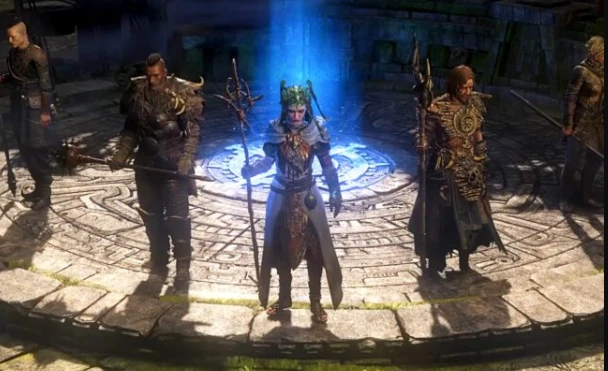
Three directions least likely to make a new player quit
If this is your first time touching any Path of Exile game, or your previous characters never made it deep into the Atlas, stop staring at league tier lists. Tier lists are written by people who hit endgame on launch day with a full stash of baseline gear. They have very little to do with your actual experience. The criteria for a new player picking an Ascendancy really come down to two things: the early game shouldn't make you want to uninstall, and the mid-game should let you keep pushing forward.
- Titan. A Warrior Ascendancy built around slam skills and armor. The gameplay is extremely intuitive — no complex rotations to memorize, no buff windows to track. Most of the time you're doing exactly one thing: walk up to the enemy and hit them. Titan's armor and life pool give you real margin for error while you're learning boss mechanics. You won't instantly fall over because you mistimed one dodge. The downside is clear speed — it's not fast. But when you don't yet know what monsters are on each map or what moves each boss has, clearing slow and finishing alive beats clearing fast and dying on the run back.
- Deadeye. A Ranger Ascendancy focused on ranged bow damage and critical strikes. The single biggest advantage of a ranged class is the safety of distance — you can deal with enemies before they ever reach you, which makes the mapping experience significantly smoother than melee. The downside is equally obvious: extremely squishy. Thin armor, small life pool. Eat a big hit and you evaporate. But that fragility is also a hidden teacher — it forces you to take positioning and prediction seriously from day one, and that habit will benefit every character you play after this one.
- Lich. A Witch Ascendancy centered on minion-based and damage-over-time playstyles. The core advantage of Lich is that you don't always have to be the one taking hits — your summons draw aggro while you maintain damage and positioning from the back line. For a new player still learning boss patterns and map rhythms, having something else on the field to soak pressure feels genuinely reassuring. The trade-off is that minion-oriented builds tend to deal damage more slowly before your gear comes together, but chasing clear speed shouldn't be a new player's priority anyway.
What these three Ascendancies share is this: when your understanding of the game is still shallow, none of them will make you feel like you picked wrong and bricked your character. The biggest enemy for a new player isn't any boss. It's frustration. Survive first. Reach the Atlas first. Then worry about chasing the ceiling.
Once you've got the basics down — these two directions make the game feel completely different
If you've cleared the campaign at least once, if you understand how Atlas progression works, and if skill links and currency usage are no longer confusing to you, then your goal has shifted from "just stay alive" to "I want to actually have fun." These two Ascendancy directions demand more from you mechanically than the three new-player picks, but they also give more back.
- Tactician. A Mercenary Ascendancy centered on area control and ranged suppression. It's not just standing in one place and holding down a button — you need to judge when to set up your position and when to pack up and reposition, and that back-and-forth rhythm keeps the gameplay way more engaging than a one-button spam build. Tactician's ceiling is high — once your gear and skill levels come online, both bossing and mapping performance rank near the top. But it does ask you to invest time getting used to a cadence where you're not always dealing damage, but every wave of damage you do land actually counts.
- Stormweaver. A Sorceress Ascendancy built around spell chaining and triggered effects. Cast your skills and the screen fills with arcing lightning and cascading damage numbers — visually satisfying and the output pace keeps up with the best of them. Stormweaver's mapping speed is firmly in the top tier among spellcasters, but the campaign phase can feel noticeably fragile because your defensive layers haven't matured yet. You'll need solid fundamentals in positioning. If you already built those habits on Deadeye or Lich, transitioning to Stormweaver will feel surprisingly natural.
These two Ascendancies have a completely different rhythm from the first three. There's a bit of an adjustment period early on, but once your gear and skills start clicking into place, the game experience jumps up an entire tier. The catch is — you need to already know how to get them there.
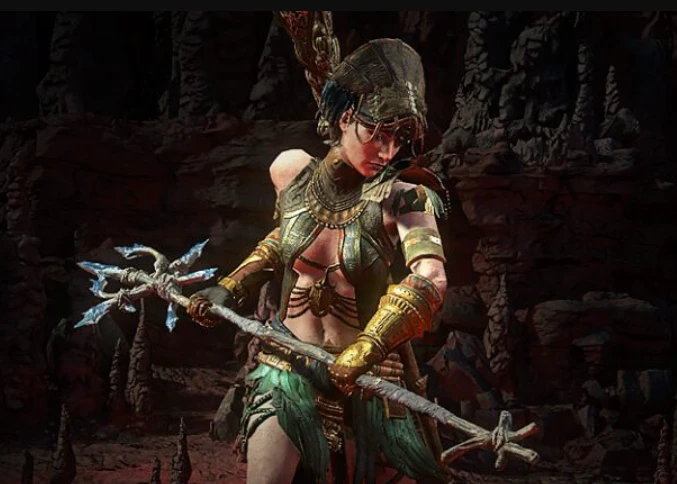
A few Ascendancies you should probably skip for your first league
POE2 currently offers two to three Ascendancy options under each base class. The "not recommended for your first league" list is honestly quite short. But these few do have a real barrier — not because they're weak, but because they demand a level of game knowledge notably higher than the others.
- Blood Mage. Another Witch Ascendancy direction, built around paying life costs for skills and recovering life through damage dealt. The design is genuinely interesting on paper. The problem is that when your gear isn't good enough, you'll find yourself burning through your own health faster than you're getting it back — you end up half-dead before the enemy is. Once your gear and recovery chain are properly set up, Blood Mage becomes an incredibly satisfying playstyle. But the transition from zero to functional isn't fun. It's endurance. And new players don't need more things to endure.
- Chronomancer. A Sorceress Ascendancy direction based on time-slowing and rhythm control — trading raw damage for control windows. This logic is completely different from the "stack damage and dump it" approach most Ascendancies follow, and mechanical mistakes are punished more harshly. If you're the type who loves dissecting mechanics and enjoys high-precision execution, Chronomancer might genuinely be your perfect fit. But if you play POE2 to relax and blast through maps, it's more likely to raise your blood pressure than lower it.
Picking an Ascendancy isn't like picking a college major. Get the major wrong and it might affect the next three to five years. Get an Ascendancy wrong and you spend some in-game gold to respec, or reroll a new character in a few days. POE2 literally has a gold-based respec system — you're not damning yourself with a wrong choice. But if you can save yourself one wasted weekend, I'd say be honest about what kind of experience you actually want right now. Do you want to survive and finish the campaign? Do you want fast, satisfying mapping? Or do you want to push your mechanical limits? Those three goals point to completely different Ascendancies. Don't copy someone else's answer. Their answer was written from their foundation, not yours. Pick what fits the stage you're at. You'll have more than enough time later to try every single one of the twenty-plus Ascendancies one by one.


