












English


Guide
What's Different Between High-Tier and Low-Tier Play in Monopoly GO?




Monopoly GO's rules never change from start to finish, but the rhythm of play is completely different between high tiers and low tiers. Low-tier players are tightest on dice, having to stop and wait for the refill after only a few rolls; high-tier players are instead blocked by cash, with a single landmark costing tens of millions and building as the real threshold. The blocked spot is different, so the judgment of where to spend dice and how to hold cash flips completely. The two ends often make opposite choices, and copying someone else's approach only leads further astray.

Low Tiers Are Blocked by Dice, High Tiers by Cash
The most obvious difference between the two tiers is what they lack.
- Low tiers have few dice and must budget carefully: starting dice are scarce and the refill is slow, so every roll has to go where it is worth spending.
- High tiers face expensive landmarks and never have enough cash: landmarks grow pricier the further along you go, and cash saved over a long time only covers one or two levels.
- Fill whatever is missing the most: those short on dice save dice, and those short on cash chase the discounts.
Once it is clear whether dice or cash is the blockage, the choices that follow have direction.
Low Tiers Chase Speed, High Tiers Chase Savings
The same building plays out at completely different moments across the two tiers.
- Low tiers should build whenever possible and not sit on cash: while building is cheap, build as you can, because cash held in hand only invites a Bank Heist.
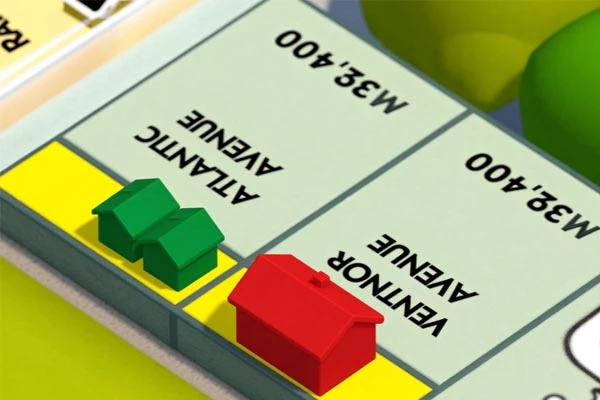
- High tiers wait for the discount and build in one push: once landmarks are expensive enough, paying full price is not worth it, so save up for the building discount days and push through together.
- High tiers value cost-saving methods more: channels that save cash, such as the Color Wheel and discount events, grow more valuable the higher the tier.
One rushes for speed, the other rushes for discounts, and the rhythm is far apart.
Low Tiers Look at Single Gains, High Tiers at the Cycle
The judgment of returns also sits on different levels between the two tiers.
- Low tiers take whatever reward comes: stickers, cash, dice; whatever arrives is real, so gather it up before anything else.
- High tiers calculate input against output: how many dice for how much reward, judged quickly, and events that are not worth it are skipped.
- High tiers care more about multiplier control: raise the multiplier only six to eight spaces from a scoring tile, and roll ordinary tiles at a low multiplier so the dice are not wasted.
One quits while ahead, the other calculates to the end, and the returns naturally split apart.
The Tier Difference Is Where the Resources Get Blocked
What separates high and low tiers is not who understands the rules better, but where their resources get blocked. Low-tier dice cannot turn enough, so every bit of progress has to be rolled out bit by bit; for high tiers dice are no longer the issue, and the huge cash needed for building becomes the new bottleneck, so the approach shifts from saving dice to working the cash. The same rule, placed in two different situations, produces completely opposite actions, and that is where Monopoly GO's lasting appeal comes from.
Between high and low tiers there is no single strictly better approach, only the choice that fits the current situation. When dice are scarce, put every roll onto the tile it should be used on, and take whatever reward comes; when cash is expensive, put every amount onto discounts and the Color Wheel, and avoid spending wherever possible. The players who truly understand the game can see their own weak point at any moment, and as the tier climbs, they gradually shift the focus from dice to cash. Tier is not a threshold but a reminder: when the bottleneck changes, the approach has to change with it.


