










English


Gameplay
Lineage Classic Knight Gear Guide: From Green Gear to Endgame




The Knight in Lineage Classic has one defining trait: high floor, high ceiling. In full green gear, you're already tankier than an Elf or Dark Elf could dream of being. But at the high end, the gap between a well-geared Knight and a poorly-geared one isn't just a stat difference — it plays like a completely different class.
I've been playing Knight for years, working my way from green gear all the way to endgame. The mistakes I've made along the way could fill a book. What follows isn't a gear checklist. It's an actual upgrade path — the kind I wish someone had handed me when I started.
The One Upgrade Order That Never Fails
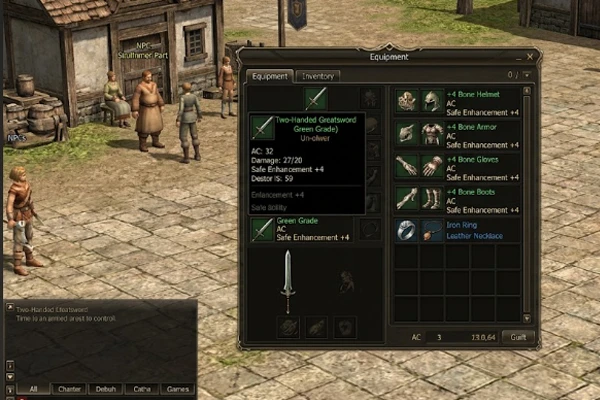
Every new Knight dumps their first batch of Adena into armor. Makes sense on the surface — you're a tank, you want to be tanky. The logic isn't wrong, but the order is. Knight gearing should go weapon first, shield second, armor and accessories last. Every weapon upgrade directly multiplies your farming speed. Faster kills mean faster XP and more Adena drops, which makes every subsequent upgrade easier to afford. Shield comes second because every point of AC you gain reduces your potion consumption — and in Lineage Classic, potions are a continuous operating cost. Drinking fewer pots is functionally the same as earning more Adena per hour. Keep your weight under 49% so your HP and MP regen naturally — cross that line and even your recovery shuts off, making your potion burn even faster. Armor and accessories come last. Not because they don't matter, but because the first two slots need to be right before your economic engine starts running smoothly. Once it's running, you swap armor pieces one at a time with zero stress.
Green Gear Phase: Spend the Minimum, Get Stable
Green gear is your first complete set, and how you handle this phase determines whether you transition smoothly into blue gear or stall out. The goal here isn't impressive stats. It's making sure every Adena lands where it counts:
- Your primary weapon should be a Rapier paired with a shield, aimed at undead mobs. Skeletons, zombies, and ghouls are your most reliable source of XP and Adena through the early and mid levels. The Rapier deals bonus damage against undead and is one-handed, so you keep your shield equipped. A +6 Rapier with a decent green shield will farm undead zones far more efficiently — and with far less potion burn — than any two-handed sword. For non-undead farming spots, the Damascus Blade (one-handed, unbreakable trait) is your backup. Carry both and swap based on where you're grinding. Don't be the Knight who brings one weapon to every fight.
- Armor: chest and helm first, the rest can wait. Your chest piece gives the most AC, helm is second. Swap these two to green first. Gloves and boots can stay white for now — the difference is marginal. For enchanting: standard armor is safe to +4. But here's the detail most guides skip — bone armor, leather armor, and most shields have a safe enchant limit of +0, not +4. Before you apply a single Armor Enchant Scroll to anything, verify the safe limit on that specific piece. Guessing gets your gear destroyed.
- Shields: use one, but pick the right one. The Elven Shield has a safe enchant limit of +6, making it one of the best value shields in the green phase. A standard green shield, however, may have a safe limit of +0 or +2 — push it to +4 and it'll almost certainly shatter. Never enchant a shield without confirming its safe limit first.
- Accessories can wait. The stat gains from green-tier rings and necklaces are negligible. Unless one drops directly into your inventory, don't spend Adena on these. Save that budget for the blue phase, where accessories actually start to matter.
The real danger in the green phase isn't having bad gear. It's spending too much on pieces you're about to replace. A set of +4 green armor plus a +6 Rapier and a shield within its safe limit costs you a manageable amount of Adena — and it'll carry you comfortably to the level where blue gear becomes available.
Blue Gear Phase: The Knight's First Real Power Spike
Blue gear is where the Knight playstyle takes a clear step up. Your AC starts holding against things that used to shred you, and your damage output leaves green gear in the dust. It's also the phase where bad spending decisions hurt the most:
- Weapon upgrade first, and choose carefully this time. In blue gear, the one-handed sword + shield combo becomes your default. Seruki's Sword and the Katana are the classic one-handed picks — safe enchant both to +6. For pure PVE farming, the Damascus Blade (one-handed, unbreakable) at +6 is still a workhorse. All three are one-handed swords. A Knight without a shield isn't a Knight.
- Your shield is the real game-changer — but check the safe limit first. A blue shield pushes your AC and damage reduction to a level where you'll feel the difference immediately, especially in boss fights and PVP. But shields like the Reflection Shield have a safe enchant limit of +0 or +2, not +4. Enchanting a Reflection Shield straight to +4 will almost certainly destroy it. Always check the safe limit of your specific shield before applying scrolls. Never assume it follows armor rules.
- Replace armor one piece at a time. Blue armor costs dramatically more than green. Follow the order: chest to helm to boots to gloves to cloak. Standard armor pieces stay at +4 safe limit. Exception: Elven-series armor like Elven Plate Mail has a safe limit of +6, so those pieces can go further. If your set bonus gives extra AC or damage reduction, prioritize completing the set.
- Accessories: start filling the slots now. Blue-tier accessories start delivering noticeable gains. Strength rings and a Strength necklace are the Knight standard — grab these two first. Belt can wait until you're further along.
The rule from green gear still applies: don't over-invest in pieces you're about to outgrow. Blue gear is the phase you'll spend the most time in. Weapons cap at +6. Armor caps at +4 or +6 depending on the piece's safe limit. Shields stay strictly within their specific safe value, whatever that number is. Any extra Enchant Scrolls you accumulate — save them.
Red Gear and Endgame: When Are You Actually Done?
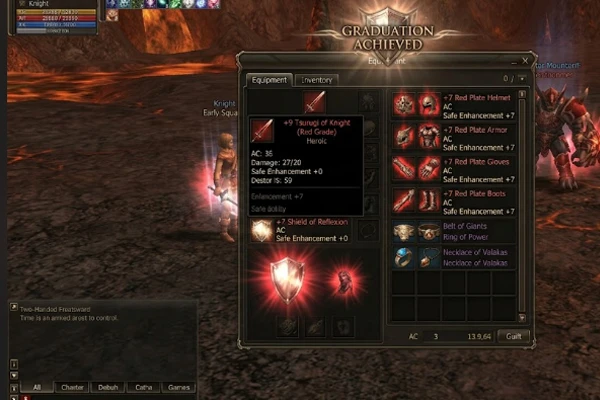
Let's address something most guides gloss over: red gear in Lineage Classic is whale territory. Items like Kurtz's Sword, the Rebel's Shield, and Knight Vald's Sword cost sums of Adena that only top-tier players or elite Blood Pledges can realistically reach. For the average player or a light spender, a set of +7 to +9 blue gear is a completely legitimate endgame setup. Red gear is aspirational, not mandatory. Know where your budget ends and play accordingly. If you do enter the red gear tier, every purchase hurts. A lot of Knights hit this stage and fall into a loop — earn some Adena, buy one piece, barely notice the improvement, grind more, repeat. Before you start buying reds, ask yourself one question: what problem am I actually trying to solve? Can't survive in PVP? Can't hold boss aggro? Farming too slowly? Different answers point to different gear priorities. PVP demands shield and armor upgrades first. Farming needs the weapon. Boss tanking needs a balance of AC and damage reduction. Don't buy gear just because you saw someone else wearing it. There's no fixed definition of graduation in Lineage Classic. Some players say full blue +9 is endgame. Some say it's being able to solo a specific boss. My definition for a Knight: you can reliably do the one thing you built this character to do — tanking bosses, fighting in siege wars, or grinding efficiently — without needing to stop for resupply or wait on cooldowns. Once you hit that point, further enchanting is nice to have. It shouldn't be your primary goal.
Three Habits That Save You a Fortune While Gearing Up
I've covered the three gear phases. Here are three habits I picked up along the way. They seem small, but the Adena they save adds up faster than you'd think:
- Always check the trade board before you craft or enchant anything yourself. Buying second-hand from other players is almost always cheaper than sourcing materials and enchanting from scratch. A pre-enchanted +6 blue weapon or +4 blue armor piece gets listed cheap all the time — someone's swapping builds, someone's quitting, and their loss is your discount.
- Don't burn your Enchant Scrolls one at a time. Stockpile them until you have a meaningful stack, then enchant in one session. When you've only got one or two scrolls and your weapon shatters, you're left with nothing and your morale tanks with it. Save up five to ten before you attempt anything risky. If one piece breaks, you've got backups and you're not standing around with a broken character.
- Never throw away gear you've outgrown. When you swap from green to blue, list your old pieces on the trade board or pass them to an alt. Knight green gear is perfectly usable for a new Elf or Mage — what looks like junk to you is exactly what someone else is searching for. Every Adena you make from old gear is budget toward your next upgrade.
All three habits boil down to the same mindset: treat every Adena as a tool that can earn you more Adena, not as spending money. Gearing up isn't a hand-me-down chain where you constantly buy new and discard old. It's a snowball. Start it right, and it builds itself.


