











English


Gameplay
How to Play FC 26 Career Mode?




EA Sports FC 26 Career Mode is one of the most popular gameplay modes in the FC series. Compared to the online competitive mode, Career Mode focuses more on long-term development and club management experience. Players can either become a professional player and experience the growth process, or take on the role of a team's head coach, responsible for transfers, tactics, and lineup management. From lower leagues to top European competitions, every decision can affect the team's future development.
Choosing the Right Career Mode
After entering the game, players need to decide whether to choose a player career or a manager career. The two modes have completely different development paths, suitable for different types of players. The player career focuses more on individual growth, while the manager career requires responsibility for the operation and management of the entire team.
Common starting options include:
l Playing as a young player to start a professional career
l Joining a top club to compete for championships
l Starting from a lower league
l Creating a custom team for management
l Coaching a traditional powerhouse to complete a revival plan
Different choices will bring different game experiences; choosing the right starting point can enhance the enjoyment of subsequent gameplay.
Emphasize the Training System to Enhance Growth Speed
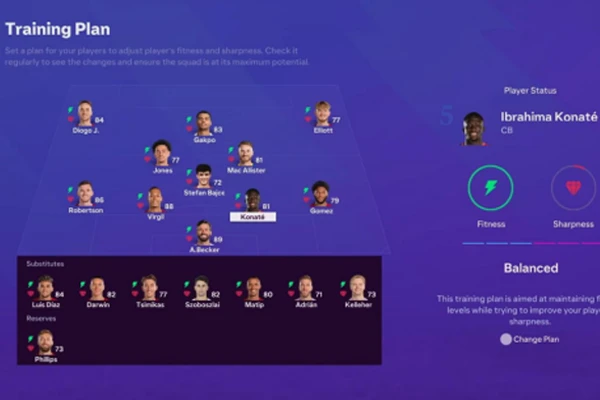
The training system is a crucial component of Career Mode, requiring attention from both players and head coaches. Continuous training leads to stable improvement in player abilities, enhancing match performance and overall competitive form.
To maximize growth efficiency, players need to develop training plans tailored to individual player characteristics. Young players typically possess greater potential for growth, while experienced veterans are better suited to serve as core strengths.
Key aspects to consider during training include:
l Regularly completing training programs
l Prioritizing the enhancement of core abilities
l Appropriately managing training intensity
l Maintaining player match fitness
l Controlling energy expenditure to prevent injuries
A well-planned training program helps the team maintain stable competitiveness throughout the season.
The Transfer Market is Key to Team Building
Improving team strength depends not only on training but also on the transfer market. Strategic signings can quickly address roster weaknesses and build a pool of potential players for future development.
When making transfers, players' age, abilities, salaries, and future growth potential must be comprehensively considered. Some young players, while currently of average ability, can develop into core players for the team after training.
Methods to improve transfer success rates include:
l Evaluating target player data in advance
l Paying attention to players whose contracts are about to expire
l Introducing players who fit the tactical system
l Controlling the team's salary structure
l Emphasizing the development of young players
Making reasonable use of the transfer market can help the team continuously optimize its roster structure.
Tactical Setup Determines Match Results
The outcome of a match is closely related to tactical arrangements. Even with excellent players, it's difficult to unleash the team's true potential if the tactical system is unreasonable. Developing tactics based on the team's characteristics is a crucial aspect of career mode.
Teams with speedy wingers are suited for fast counter-attacks, while lineups with more technically gifted midfielders are better suited for controlling the tempo of the game. Adjustments also need to be made based on the actual situation when facing different opponents.
Common tactical options include:
l High-pressing style
l Possession-based organization system
l Quick counter-attack tactics
l Wing breakthrough and crossing
l Solid defense and counter-attack strategy
Flexible tactical adjustments can improve a team's adaptability and help players cope with various match challenges.
Developing a Long-Term Development Plan to Maintain Competitiveness
The charm of Career Mode lies in the long-term management experience. A successful club not only needs to win current matches but also needs to consider the development direction for the next few seasons. Young player development, youth training, and financial management all affect the team's long-term competitiveness.
Reasonable planning can keep the team dynamic while avoiding problems such as an aging squad and financial strain. In the long run, stability is often more important than short-term results. Key planning aspects to focus on include:
l Building a youth training system
l Cultivating potential young stars
l Maintaining a reasonable age structure
l Controlling transfer and salary budgets
l Setting phased development goals
As the season progresses, the team will gradually develop its own style, and players will be able to experience the entire process of growing from an ordinary team to a top powerhouse.


