











English


Gameplay
How to Build a Player Squad in FC 26?




In FC 26, a well-balanced squad directly impacts the game's tempo, offensive efficiency, and defensive stability. The different player attributes, positional characteristics, and tactical compatibility all determine the team's overall performance. Choosing a suitable squad structure based on your playing style can lead to more consistent results in league matches, ranking matches, and high-intensity competition.
Formation Selection Determines the Team's Basic Style
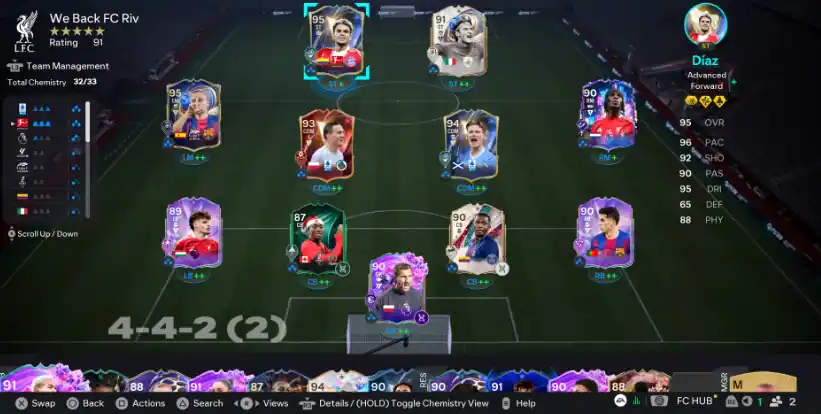
Formation is a crucial foundation for team building. Different formations correspond to different game tempos and tactical approaches. Players who prefer fast counter-attacks often choose a two-striker or wing-based formation, while those who favor possession-based play are better suited to a more physically imposing midfield. The 4-3-3 formation is stable in wing play and possession-based attacks, the 4-4-2 formation emphasizes a balance between attack and defense, and the 4-2-3-1 formation is suitable for midfield organization and fast counter-attacks. Formation not only affects player positioning but also determines passing routes, defensive coverage, and the overall speed of transitions between attack and defense. When choosing a formation, it's essential to consider player characteristics and personal playstyle, rather than simply adopting popular configurations.
Core Player and Positional Combinations
Core players in a team typically determine the overall tactical rhythm. For example, an organizing midfielder is responsible for passing and orchestrating the offense, a speed-oriented winger is responsible for advancing and breaking through, and a center forward is responsible for finishing. Player positional combinations need to ensure a complete chain between offense and defense.
l Midfielders need passing and interception abilities.
l Full-backs should balance speed and defense.
l Center forwards need poaching and shooting abilities.
l Wingers are suited to high speed and dribbling attributes.
l Defensive midfielders are responsible for protecting the defense and organizing transitions.
A reasonable combination of player positions can reduce formation weaknesses and improve overall tactical execution efficiency.
The Impact of Player Ability Values and Team Chemistry
Player ability values are not only reflected in shooting, speed, and defensive data, but also affect actual performance in matches. Players with high ability values are more likely to make breakthroughs, tackles, and key passes at crucial moments. Team chemistry is equally important; players from the same league, club, or country are more likely to develop understanding and improve match stability. A team with high chemistry can reduce error rates and make passing and movement smoother. Even if some individual player ratings aren't top-tier, a well-balanced overall team composition can still deliver excellent results in actual matches.

Tactical Setup and Rotation Arrangements
Team composition involves not only the starting eleven but also tactical setup and substitute rotation. During the match, it's necessary to adjust the intensity of pressure, defensive height, and attacking tempo based on the opponent's style. Against high-pressure teams, midfield ball control is crucial; against defensive lineups, wing play and long-range shooting abilities need to be enhanced. Substitute player configuration is also critical; speed-oriented substitutes are suitable for attacking the defense later in the game, while defensive substitutes can stabilize the game's tempo when leading. Proper rotation also reduces player fatigue, allowing the starting lineup to maintain a more stable competitive state.
Current Version Popular Team Composition Trends
With version updates, popular team compositions will constantly change. The current version places greater emphasis on midfield control and rapid transitions between attack and defense, making players with high passing and mobility more sought after. A double defensive midfield system enhances defensive stability while creating more attacking space. In high-level matches, team composition increasingly emphasizes overall coordination rather than simply stacking high-rated players. The balance between speed, defensive coverage, and passing ability has become a crucial aspect of team building in the current version. Choosing a lineup that suits your personal playing style and tactical approach is often more effective than blindly chasing popular star players.


