












English


Gameplay
FC 26 Division Rivals Guide: Rewards, Divisions, and How to Climb




Division Rivals is where most Ultimate Team players spend their week, and it's the single biggest source of rewards in the game. Packs, coins, player picks, all of it flows through the Rivals ladder, and how well you do there decides how fast your club grows.
The mode got a few quiet changes this year that make it friendlier than past versions, and knowing them is the difference between grinding inefficiently and climbing fast. Here's how Rivals works in FC 26 and how to get the most out of it.
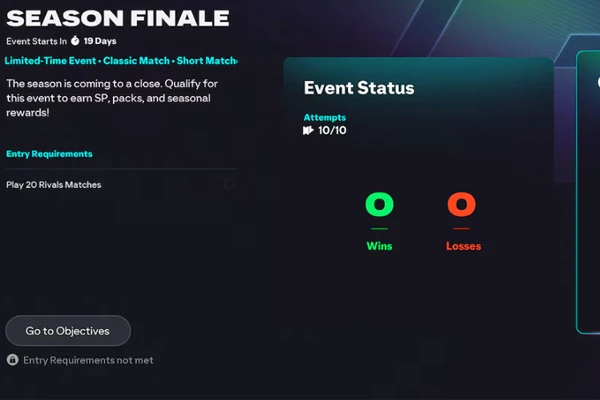
What Division Rivals Actually Is
Division Rivals is the main online competitive mode in Ultimate Team. It matches you against players of similar skill across a ladder of eleven divisions, running from Division 10 at the bottom up to Division 1, with an Elite Division sitting above the rest.
The point of the mode is weekly rewards. Every week, your division and your activity decide what you collect, and higher divisions pay out better packs, more coins, and better player picks. The climb isn't just for bragging rights; it's the main lever on how much your club earns each Thursday.
What's changed this year is that Rivals rewards participation, not just winning. The stage system and the new challenge mechanics mean you can bank rewards even on a losing week, which is a real shift from the all-or-nothing grind of older versions.
How the Ladder and Checkpoints Work
Rivals progression runs on stages, and it's more forgiving than a simple win-loss ladder.
A win moves you up one stage, and a win streak after two straight wins moves you up two stages at a time. A draw keeps you where you are. A loss drops you down one stage, unless you're sitting on a checkpoint that protects you.
Checkpoints stop you from sliding below a certain point, which keeps a few bad matches from undoing a week of progress. FC 26 adds Limited Checkpoints with a loss counter, so a checkpoint only holds until you've lost a set number of times, then it breaks and relegation becomes possible. That balance keeps matchmaking honest, because it stops players from camping a checkpoint they can't actually defend.
The practical takeaway is to protect your win streaks and lean on checkpoints. A run of two or three wins does more for your climb than a scattered week of wins and losses.
How to Maximize Your Weekly Rewards
Rewards run on a simple points system. A win pays 3 points, a draw pays 1, and a loss pays nothing, and your weekly tier is set by how many of those points you bank:
- Hit the upgraded tier. Base rewards unlock at 15 points and upgraded rewards at 30 points, so clearing that 30-point bar is your weekly goal.
- Play in the highest division you can hold. Reward quality scales with your division, and Division 1 and Elite pay out TOTW packs, high-rated player picks, and the biggest coin totals.
- Claim on Thursday. Weekly rewards drop on Thursday, and you collect them in-game or through the Web and Companion apps, so don't let a finished week sit unclaimed.
- Don't skip a week. Even a modest point total pays out something, and missing the reset entirely is the only way to actually lose value.
The mindset is to treat Rivals like a weekly job with a paycheck. Show up, hit the threshold, claim it, and repeat.
Bounties, Duels, and the Extra Points They Pay
The new mechanics in FC 26 are where a lot of the hidden value sits, and they reward you even when you don't win:
- Bounties are small in-match goals. Score the first goal, keep a clean sheet, or win by two, and you collect Rivals Points, Champions Qualification Points, Season XP, coins, and packs. They behave like daily quests, and you can complete them without winning the match.
- Duels are bounties with a winner. Only one player in the match can claim a duel reward, but the points still pay out whether you take the match or not.
- Bounties can skip stages. Some bounties award stage skips, which means a player who chains the right objectives can climb divisions without winning every game.
- Complete them every day. Because bounties reset daily and pay even on losses, they're the most consistent source of extra progress in the mode.
These are the biggest reason FC 26 feels less punishing than older versions. A losing player who still does their bounties walks away with progress, and that changes the whole rhythm of the week.
How Rivals Feeds Into Champions
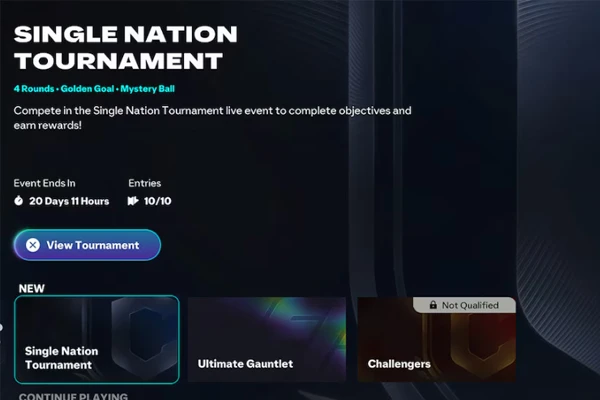
Rivals isn't just a standalone ladder, it's the gateway to Champions, and that link got simpler this year.
You earn Champions Qualification Points as you play Rivals, with the amount tied to your division. Wins pay more than losses, but losses still contribute, so qualifying is a matter of banking points over time rather than one big playoff run. FC 26 removed the Champions Playoffs entirely, which makes Rivals the only route into the weekend competition.
If you don't reach the qualification bar, there's still the Challengers bracket, a lower-tier version of Champions with its own format and reduced rewards. It's a softer landing than missing out completely, and it means the Rivals grind always leads somewhere.
The cleanest way to think about it is that Rivals is the engine and Champions is the payoff. Climb in Rivals, bank qualification points, and the weekend competition takes care of itself.


