











العربية


Guide
Are There Tactics for Castle Siege in Legend of Ymir?




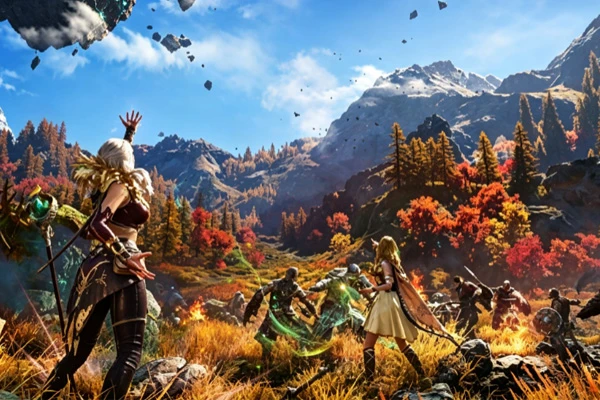
In the gameplay of Legend of Ymir, Castle Siege is a highly challenging multiplayer mode that requires large numbers of players to compete for strongholds and vital resources. Compared to regular dungeons or small-scale battles, Castle Siege places greater emphasis on team coordination, battlefield judgment, and resource management; individual combat power alone is often insufficient to sway the outcome. Many players tend to get caught up in chaotic brawls upon entering siege battles, leading to reduced damage output or frequent deaths. Therefore, mastering some siege tactics in advance can greatly improve overall team combat effectiveness and the chances of victory. Castle Siege prioritizes teamwork, target prioritization, and the ability to adapt on the fly.
Setting Clear Offensive and Defensive Goals to Boost Push Efficiency
Once the siege begins, the team needs to quickly identify the primary objectives for each phase. Different timing calls for different tactical approaches to avoid dispersed manpower that disrupts overall momentum.
- Prioritizing Key Strongholds: Focus on capturing critical strongholds or core structures based on the battlefield situation, ensuring the team can continuously expand its advantage.
- Coordinating Around Objectives: Avoid having all members blindly chase enemies; instead, focus collective efforts around siege objectives to maximize execution efficiency.
When the team consistently focuses on key objectives, it not only reduces ineffective skirmishes but also stabilizes the siege push, steadily building a cumulative battlefield advantage.
Maintaining Team Formation to Avoid Fighting Individually
Castle Siege involves many participants. If members are too far apart or act out of sync, they become easy targets for the enemy. Thus, maintaining formation is even more important than individual performance.
- Absorbing Frontline Pressure: Frontline units are responsible for absorbing pressure and drawing enemy fire, creating a safe environment for the backline.
- Protecting Ranged Classes: Backline damage dealers and support classes must maintain proper distance to avoid being directly engaged by enemy divers.
A stable formation effectively boosts overall survivability and enables smoother coordination between damage, control, and support, sustaining advantage during prolonged engagements.
Utilizing Skills and Battlefield Timing Effectively
During sieges, large numbers of skills are unleashed in rapid succession. Without proper timing, key skills may overlap, crowd-control chains may break, or burst damage may fall short—all undermining the team's push rhythm. Players need to sequence skill usage based on enemy distribution, battlefield dynamics, and ally cooldowns. Area-of-effect and crowd-control skills are best used when enemies are concentrated or key targets are exposed, creating better damage windows for the team. At the same time, avoid committing core skills when enemies are scattered or about to retreat. Reserve burst skills for critical offensive and defensive phases to maximize their impact, helping the team maintain sustained pressure and higher overall combat efficiency throughout the siege.
Monitoring Battlefield Changes in Real Time and Adjusting Tactics
The siege situation evolves quickly, with both sides constantly shifting attack routes and defensive priorities. The team must adapt its tactics dynamically based on real-time developments.
- Adjusting Push Directions: Adapt the push direction according to enemy troop distribution to avoid getting stuck in prolonged head-on attrition.
- Organizing Rapid Reinforcements: Quickly deploy reinforcements when a key stronghold comes under attack to prevent the defense line from being broken.
Continuously scanning battlefield changes and executing rapid tactical adjustments helps maintain initiative and makes it easier to create favorable opportunities during transitions between offense and defense.
Castle Siege in Legend of Ymir is not solely about character power; it places much greater weight on team execution, tactical planning, and coordination among members. If players can clarify offensive and defensive objectives, maintain proper formations, time their skills wisely, and adjust strategies according to battlefield shifts, they can significantly enhance overall team effectiveness. As siege experience accumulates, understanding of map layouts, stronghold values, and enemy behavioral patterns will deepen, enabling the development of more mature tactical systems and yielding more consistent siege outcomes in large-scale combat.


