












العربية


Gameplay
Is character progression in Blue Protocol difficult?




In Blue Protocol’s overall growth system, character progression is a core element that players inevitably engage with throughout their long-term journey. This system is not a simple matter of "leveling up to get stronger," but rather a composite structure comprising multiple modules, including equipment enhancement, skill advancement, resource acquisition, dungeon challenges, and class mastery. For new players, the early growth pace is relatively forgiving, allowing them to quickly establish basic combat capabilities through main quests. However, as the game deepens, the mid-to-late stages place significantly higher demands on resource planning and system comprehension. The difficulty of character progression cannot be measured by a single standard; it is a dynamic experience that evolves alongside the player.
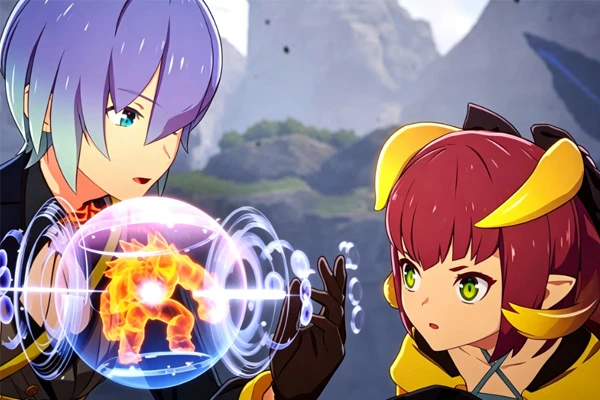
Early Progression: Forgiving Pacing and Ample Guidance
In the initial stages, character growth primarily relies on main quests and guided tutorials. A clear structure allows players to grasp basic combat and progression logic within a short time, rendering the early experience highly newcomer-friendly.
- Main quests provide substantial experience points, basic gear, and feature unlocks, enabling characters to quickly establish foundational combat capabilities and smoothly advance the story.
- The unlock pace of advanced features is intentionally gradual, allowing players to familiarize themselves with combat mechanics, skill casting, and basic progression paths without the pressure of information overload.
This phase leans heavily toward onboarding, allowing players to learn the ropes in a low-stress environment. A smooth early experience drastically reduces the adaptation cost when entering core gameplay later.
Mid-Game Progression: Surging Resource Demands and Rising Pressure
As characters enter the mid-game, the progression system fully unlocks, requiring players to juggle equipment enhancement, skill upgrades, and dungeon challenges simultaneously. This causes resource demands to surge, testing the player's tactical planning.
- With equipment enhancement and skill upgrades entering their core phases, the demand for upgrade materials, Luno, and advanced resources increases significantly. Without proper planning, players can easily scatter their resources, leading to severe shortages.
- Daily dungeons and events become the primary lifelines for resources. These require consistent time investment; otherwise, growth speed will noticeably lag behind the server average.
This stage shifts the focus toward time commitment and resource management. Mid-game growth efficiency depends largely on a player's ability to allocate resources rationally.
Late-Game Progression: Class Mastery and System Optimization
Once characters reach the late-game, progression logic shifts fundamentally from "resource-stacking accumulation" to "understanding-driven optimization." At this point, players are no longer simply bumping up gear scores or skill numbers; they must deeply understand class positioning, skill synergy, rotations, and combat rhythm. Furthermore, they must continuously min-max their builds and skill bars based on specific dungeon mechanics and team compositions to maximize efficiency in high-difficulty end-game content. This stage acts as a comprehensive test of a player's strategic optimization and system integration capabilities.
Long-Term Progression: Consistent Participation and Stable Accumulation
Character progression is a marathon, not a sprint. It is a sustained process where players must gradually enhance their overall strength through steady engagement; otherwise, growth stagnation is inevitable.
- Daily quests, limited-time events, and periodic dungeons provide stable resource streams. They serve as the foundation for maintaining growth momentum, and missing them can result in noticeable progression gaps.
- Multiplayer raids and high-difficulty challenge content dictate the ceiling of character growth, allowing players to acquire top-tier gear and rare enhancement materials through persistent clears.
This long-term framework gives character growth a phased yet sustained nature. The more consistent the participation, the smoother and more controllable the overall growth curve becomes.
The difficulty of character progression in Blue Protocol is neither inherently high nor low, but rather exhibits distinct phased variations: easy onboarding in the early game, rising resource pressure in the mid-game, and deep strategic optimization in the end-game. While the initial stages offer quick feedback loops, the late-game demands continuous adaptation of development strategies. This system rewards players who enjoy long-term investment and gradual optimization. As long as resources and gameplay pacing are planned wisely, the journey remains highly manageable and deeply rewarding.


